 Skip to content
Dangerous Goods Packaging: Why Compliance Starts Long Before Shipping
When people think about dangerous goods compliance, they often focus on labels, documentation, or transport regulations. However, one of the most critical aspects of dangerous goods safety is often overlooked: packaging.
A package isn’t just a box that gets a product from A to B. For dangerous goods, packaging is a safety system designed to protect people, property, and the environment throughout the transport journey.
In a recent episode of Logicom Hub’s Cargo Couch podcast, Sam Stretton spoke with Kevin Dougerty, Director of Operations at Air Sea Containers, about the importance of selecting, testing, and using dangerous goods packaging correctly. The conversation highlighted a simple truth: even the best dangerous goods training can be undermined if packaging requirements are misunderstood or ignored.
Packaging Is More Than Just a Box
Many organisations see packaging as a procurement exercise. Find a box, put the product inside, seal it up, and ship it. Dangerous goods packaging doesn’t work that way.
Before selecting a package, businesses need to understand:
- The UN number of the substance
- The hazard class
- The mode of transport
- The quantity being shipped
- The packaging instructions applicable to that product
- Any compatibility concerns between the product and the packaging materials
The first step is always accurate classification. A Safety Data Sheet (SDS) can provide useful information, but businesses should remember that SDS documents are only a starting point and should always be reviewed carefully.
For those new to dangerous goods shipping, completing a Dangerous Goods Awareness course provides the foundation needed to understand packaging requirements and responsibilities.
Learn more about Dangerous Goods Training: https://logicomhub.com/dangerous-goods-training/
Why Dangerous Goods Training Matters
One of the key messages from the discussion was that dangerous goods packaging decisions should never be made in isolation.
Dangerous goods regulations require competency across the entire supply chain. The person signing a Shipper’s Declaration is confirming that:
- The goods have been correctly classified
- The packaging is suitable
- The package has been assembled correctly
- All applicable regulations have been followed
That signature carries significant legal responsibility.
As Kevin explained, dangerous goods transport is largely built on trust. Carriers trust consignors. Regulators trust documentation. Airlines trust the information they receive. Without proper training and internal processes, that trust can quickly break down.
For guidance on dangerous goods compliance, businesses can refer to:
- International Air Transport Association (IATA): https://www.iata.org
- International Civil Aviation Organization (ICAO): https://www.icao.int
- UK Health and Safety Executive (HSE): https://www.hse.gov.uk
The Hidden Risks of Packaging Changes
One of the biggest misconceptions in dangerous goods shipping is that small packaging changes don’t matter. In reality, even minor changes can invalidate a package’s approval.
Examples include:
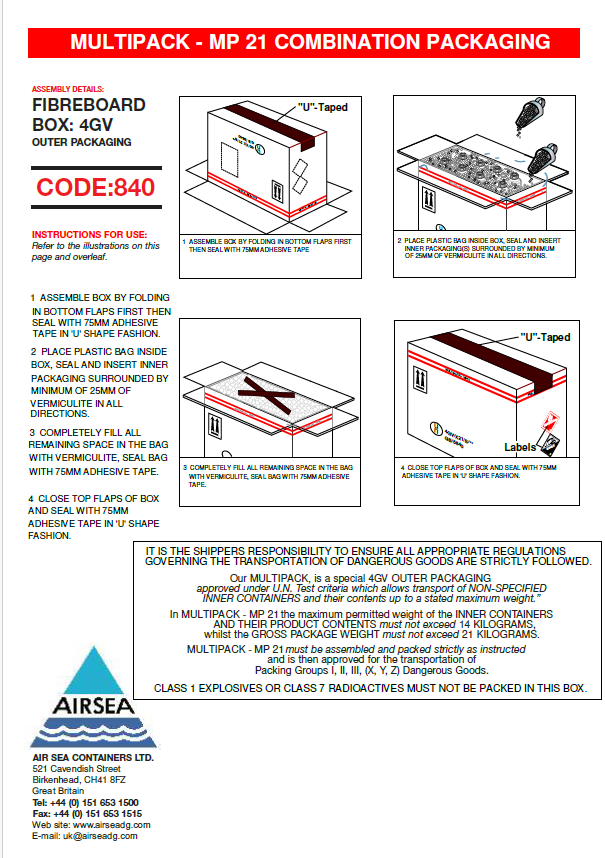
Using Different Tape
Many UN-certified boxes specify:
- Tape width
- Tape type
- Taping pattern
If a package was tested using 75mm tape and an operator substitutes 50mm tape, the certification may no longer be valid.
Changing Void Fill Materials
Another common mistake occurs when companies replace absorbent or cushioning materials.
For example, a package originally tested with vermiculite may not automatically remain compliant if the business switches to packing chips or alternative absorbents.
The package was tested as a complete system. Altering one component changes the performance characteristics and may require retesting.
Ignoring Closure Requirements
Drums, bottles, and containers often have specified closure torque requirements.
If closures are not tightened correctly, the package may fail during transport, even if every other aspect of the shipment is compliant.
Understanding UN Packaging Testing
Many dangerous goods packages undergo rigorous testing before being approved for use.
Testing may include:
- Drop tests
- Stack tests
- Vibration testing
- Material specification checks
- Internal pressure testing
The purpose is to demonstrate that the packaging can withstand real-world transport conditions.
Air Sea Containers recently became a UKAS-approved UN testing facility operating under ISO 17025 standards, allowing them to conduct packaging performance testing that supports certification by the Vehicle Certification Agency (VCA).
Learn more about packaging approvals through the UK Vehicle Certification Agency: www.vehicle-certification-agency.gov.uk
Limited Quantities Still Require Care
Another common misunderstanding involves Limited Quantities (LQ). Many shippers assume that because a product qualifies for Limited Quantity provisions, packaging standards become less important. That is not the case. While Limited Quantity shipments may benefit from certain regulatory reliefs, they are still dangerous goods. For air transport, packaging must still demonstrate performance standards such as drop and stack testing.
The key takeaway is simple: Limited Quantity does not mean risk-free.
Building a Culture of Compliance
Dangerous goods incidents rarely occur because of a single mistake. More often, they result from small process failures that accumulate over time.
Common warning signs include:
- Staff relying on “how we’ve always done it”
- Packaging instructions not being followed
- Informal workarounds becoming accepted practice
- Lack of refresher training
- Failure to review packaging certifications
Building a strong compliance culture means ensuring everyone understands not just what to do, but why those procedures exist.
The package is often the last line of defence between a hazardous substance and a potentially serious incident.
Final Thoughts
Dangerous goods packaging is far more complex than selecting a strong box and applying a label. Every component of the package from tape and absorbent materials to closure torque and packing methods contributes to the overall safety performance of the shipment. The most successful organisations recognise that dangerous goods packaging compliance begins with training, supported by clear procedures, competent personnel, and a commitment to continuous improvement.
At Logicom Hub, we help organisations build that competency through practical dangerous goods training, compliance support, and industry expertise.
To find out more about our dangerous goods training courses, visit: https://logicomhub.com/
Or contact our team on 0330 912 5041 or [email protected] to discuss your dangerous goods packaging compliance requirements.