 Skip to content
Shipping Dangerous Goods in Limited Quantities by Air, Sea and Road
Many everyday products are classified as dangerous goods for transport. Paints, adhesives, aerosols, cleaning products, perfumes and certain chemicals may all fall within the dangerous goods regulations.
However, when eligible dangerous goods are transported in relatively small amounts, the regulations may allow them to be shipped under the Limited Quantity (LQ) provisions.
Limited Quantities recognise that certain dangerous goods present a reduced transport risk when they are packed in small inner receptacles and suitable outer packaging. This can remove or reduce some of the requirements that would apply to a fully regulated dangerous goods shipment.
That does not mean the shipment is no longer dangerous goods.
The product must still be correctly classified, the Limited Quantity provisions must actually be permitted for that substance or article, and the requirements for the relevant mode of transport must be followed.
If you are new to dangerous goods classification, our guide to the nine Dangerous Goods Hazard Classes explains how dangerous goods are divided into classes, divisions and packing groups.
What Are Limited Quantity Dangerous Goods?
Limited Quantity provisions provide regulatory relief for certain dangerous goods transported below prescribed quantity limits.
Whether a product can be transported as a Limited Quantity depends on factors including:
- its UN number and Proper Shipping Name;
- its hazard class and, where applicable, packing group;
- the quantity contained in each inner packaging;
- the total package configuration; and
- the mode of transport being used.
For road transport under ADR, for example, the allowable Limited Quantity amount is shown in Column 7a of Table A in Chapter 3.2. A value of zero means that the substance or article cannot use the Limited Quantity provisions. GOV.UK also confirms that combination packages are generally restricted to 30 kg gross mass, while shrink- or stretch-wrapped trays are restricted to 20 kg gross mass.
For official guidance, see GOV.UK – Transporting Limited Quantities.
Start With Correct Dangerous Goods Classification
Before deciding whether Limited Quantity provisions can be used, you first need to identify exactly what you are shipping.
This means establishing the correct:
- UN number;
- Proper Shipping Name;
- hazard class and subsidiary risk;
- packing group, where applicable; and
- applicable quantity limits.
A current Safety Data Sheet (SDS) can be a useful starting point. Section 14 normally provides transport information, but the shipper remains responsible for confirming the correct classification against the regulations being used.
You can learn more in our blog, Essential Safety Data Sheets Facts Every Business Must Know.
For a broader overview of preparing dangerous goods shipments, see our Dangerous Goods Handling Procedures guide, which covers classification, packaging, marking, documentation and transport requirements across different modes.
Limited Quantity Dangerous Goods by Air
Dangerous goods transported by air are governed internationally by the ICAO Technical Instructions, with the IATA Dangerous Goods Regulations (DGR) widely used operationally by airlines, freight forwarders, ground handlers and shippers.
IATA’s DGR covers classification, packing, marking, labelling, documentation and Limited Quantity packaging requirements for dangerous goods transported by air.
You can find further information through the official IATA Dangerous Goods Regulations page.
What Changes When Dangerous Goods Are Shipped as Limited Quantities by Air?
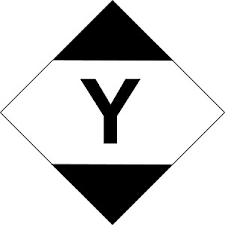
Where the Dangerous Goods List permits a substance to be transported as a Limited Quantity, the applicable “Y” Packing Instruction must be followed.
One of the main benefits is that qualifying packages do not normally need to use the same UN specification packaging required for a fully regulated shipment.
However, Limited Quantity by air still has significant requirements.
Depending on the entry and Packing Instruction, these can include:
- using suitable, good-quality combination packaging;
- complying with the applicable general packing requirements;
- following the correct Y Packing Instruction;
- remaining within the maximum quantity permitted for each inner packaging and package;
- keeping the completed package within the permitted gross weight;
- applying all required dangerous goods marks and hazard labels;
- preparing the required dangerous goods transport documentation; and
- checking relevant State and Operator Variations before offering the shipment for transport.
Air transport requirements are generally more restrictive than road or sea, so a package prepared as an ADR or IMDG Limited Quantity should not automatically be assumed to comply for air transport.
Our IATA Dangerous Goods Regulations: Air Shipper’s Guide provides a wider introduction to preparing dangerous goods for air transport.
You can also read about upcoming regulatory changes in our IATA DGR 68th Edition: Key Changes for 2027.
Limited Quantity Training by Air
Dangerous goods training is essential for personnel whose responsibilities involve preparing or processing dangerous goods for air transport.
The UK Civil Aviation Authority states that shippers, packers, freight forwarders and other relevant personnel must receive training appropriate to their responsibilities before carrying out dangerous goods functions.
For official guidance, visit the UK CAA Dangerous Goods Training requirements.
Logicom Hub offers dedicated Dangerous Goods Awareness & Limited Quantities by Air training for employees who pack, mark, label, document and prepare Limited Quantity shipments for air transport.
Limited Quantity Dangerous Goods by Sea
Dangerous goods transported by sea are governed by the International Maritime Dangerous Goods (IMDG) Code.
The current IMDG Code, Amendment 42-24, became mandatory on 1 January 2026.
You can access information about the current Code through the International Maritime Organization’s IMDG Code page.
What Are the Benefits of Limited Quantities Under the IMDG Code?
Chapter 3.4 of the IMDG Code contains the Limited Quantity provisions.
Where a substance is eligible, some of the requirements associated with a fully regulated dangerous goods package are reduced.
For example, Limited Quantity packages generally do not require the same UN specification packaging approval and hazard labelling arrangements as fully regulated packages.
However, important requirements remain.
These include:
- confirming that the dangerous goods are permitted as Limited Quantities;
- complying with the permitted inner packaging quantity;
- using suitable combination packaging;
- complying with the relevant package weight limits;
- correctly applying the Limited Quantity mark;
- complying with any applicable orientation marking requirements;
- correctly preparing the dangerous goods transport documentation; and
- complying with applicable stowage, segregation and cargo transport unit requirements.

The IMDG provisions also require the dangerous goods declaration for Limited Quantity shipments to identify the consignment accordingly.
Packaging still plays a critical role even when UN specification packaging is not required. Our blog on Dangerous Goods Packaging: Essential Compliance Tips explains why packaging should always be treated as a safety system rather than simply a box used to move a product.
Limited Quantity Training by Sea
The IMDG Code requires shore-based personnel involved in dangerous goods transport to receive training appropriate to their responsibilities. This includes people involved in classification, packing, marking, labelling, documentation, offering dangerous goods for transport and handling dangerous goods.
Logicom Hub provides Dangerous Goods Awareness & Limited Quantities by Sea training for employees involved in preparing and shipping Limited Quantities by sea.
Limited Quantity Dangerous Goods by Road
Dangerous goods transported by road in Great Britain are governed through the Carriage of Dangerous Goods and Use of Transportable Pressure Equipment Regulations, which currently implement ADR 2025, subject to UK-specific provisions and derogations.
The full current ADR can be accessed through the UNECE ADR 2025 page.
For UK-specific guidance, the Health and Safety Executive Dangerous Goods guidance is also an important resource.
Limited Quantities Under ADR
ADR Chapter 3.4 provides relief from a number of the requirements that apply to fully regulated dangerous goods.
To use the Limited Quantity provisions, the shipper must first check Column 7a of the Dangerous Goods List.
If a permitted quantity is shown, the goods may be eligible for LQ transport provided all the conditions of Chapter 3.4 are satisfied.
A zero in Column 7a means that the Limited Quantity provisions cannot be used.
Generally, qualifying Limited Quantity packages:
- do not require UN specification packaging;
- do not carry the standard hazard labels that would apply to the fully regulated package;
- must use appropriate inner and outer packaging;
- must remain within the prescribed inner packaging limits;
- must display the Limited Quantity mark;
- must comply with applicable orientation arrow requirements; and
- must meet relevant training, handling and carrier-information requirements.

For combination packaging, the maximum gross mass is generally 30 kg. For shrink- or stretch-wrapped trays, the maximum gross mass is 20 kg.
What About the Vehicle?
One of the advantages of ADR Limited Quantities is that many of the normal vehicle and crew provisions applying to fully regulated dangerous goods do not apply in the same way.
However, this does not mean there are no requirements.
For example, ADR requires carriers to receive information about the gross mass of Limited Quantity packages before carriage. Vehicle marking can also become necessary in certain circumstances when large amounts of Limited Quantity packages are being transported.
HSE guidance notes that vehicles may need Limited Quantity markings when carrying at least 8 tonnes of LQ packages, subject to the relevant ADR vehicle conditions.
You can read more through the HSE guidance on Limited Quantity exemptions.
Logicom Hub’s Limited Quantities by Sea & Road course is designed for employees who pack, mark, label, document and offer Limited Quantity consignments for road and sea transport.
Limited Quantities Are Not the Same as Excepted Quantities
Limited Quantities and Excepted Quantities are sometimes confused, but they are two different regulatory provisions.
Limited Quantities (LQ) normally allow larger amounts of eligible dangerous goods than Excepted Quantities and have their own packaging and marking provisions.
Excepted Quantities (EQ) apply to very small quantities and have separate codes, packaging requirements, testing provisions and marks.
Whether LQ, EQ or fully regulated dangerous goods should be used depends on the exact substance, quantity and transport mode.
Our guide to Dangerous Goods Transport Regulations looks at Limited Quantities, Excepted Quantities and other regulatory reliefs as part of the wider dangerous goods shipping process.
What if the Shipment Travels by More Than One Mode?
Many dangerous goods shipments are multimodal.
A package might travel by road to an airport, move by air internationally and then continue by road to its final destination. Alternatively, a container may travel by road before being loaded onto a vessel.
The fact that a shipment qualifies as a Limited Quantity under one mode does not automatically mean that it meets the requirements of another.
Each stage of the journey must therefore be considered when the package is prepared.
Air requirements are particularly important because they can be more restrictive than ADR or IMDG requirements.
If your shipments regularly move using multiple modes, read our guide explaining Multimodal Transport and how different transport modes connect.
Why Dangerous Goods Training Still Matters
Limited Quantity provisions simplify certain parts of dangerous goods transport, but they do not remove the need to understand what you are shipping.
Someone still needs to know:
- whether the substance is dangerous goods;
- which UN number and Proper Shipping Name apply;
- whether Limited Quantities are permitted;
- which quantity limit applies;
- which packaging can be used;
- how the package must be marked;
- what documentation is required;
- whether there are additional mode-specific requirements; and
- whether carrier, State or Operator variations affect the shipment.
This is why appropriate dangerous goods training remains such an important part of compliance.
If you need to build your team’s foundation knowledge first, Logicom Hub’s Dangerous Goods Awareness course introduces dangerous goods, the regulations, the nine hazard classes and how to identify dangerous goods in the workplace.
Limited Quantity Training With Logicom Hub
Logicom Hub provides Limited Quantity training covering Air, Road and Sea, with options for individual modes and multimodal operations.
Our training is designed for employees responsible for preparing, packing, marking, labelling, documenting or offering Limited Quantity dangerous goods for transport.
Explore our Limited Quantities by Air, Road & Sea training courses to find the course that best matches your responsibilities. Logicom Hub currently offers individual and combined e-learning options covering Limited Quantities by air, road and sea.
Remember: Limited Quantity does not mean unregulated. It means that specific regulatory reliefs are available only when all the conditions for using them have been met.
Always consult the current edition of the regulations for the mode of transport you are using before preparing or offering dangerous goods for carriage.
Don’t get fined, build Dangerous Goods minds.