 Skip to content

Introduction
Every dangerous goods consignment relies on one thing before anything else: packaging that will not fail. At Logicom Hub we spend our days training and advising people on the rules that govern dangerous goods transport, so we jumped at the chance to see those rules put to the test, quite literally, at Air Sea Containers in Birkenhead.
In this post we introduce Air Sea Containers, share what we saw on the day, and explain why UN packaging performance tests matter to anyone who prepares, ships or handles dangerous goods.
About Air Sea Containers Ltd
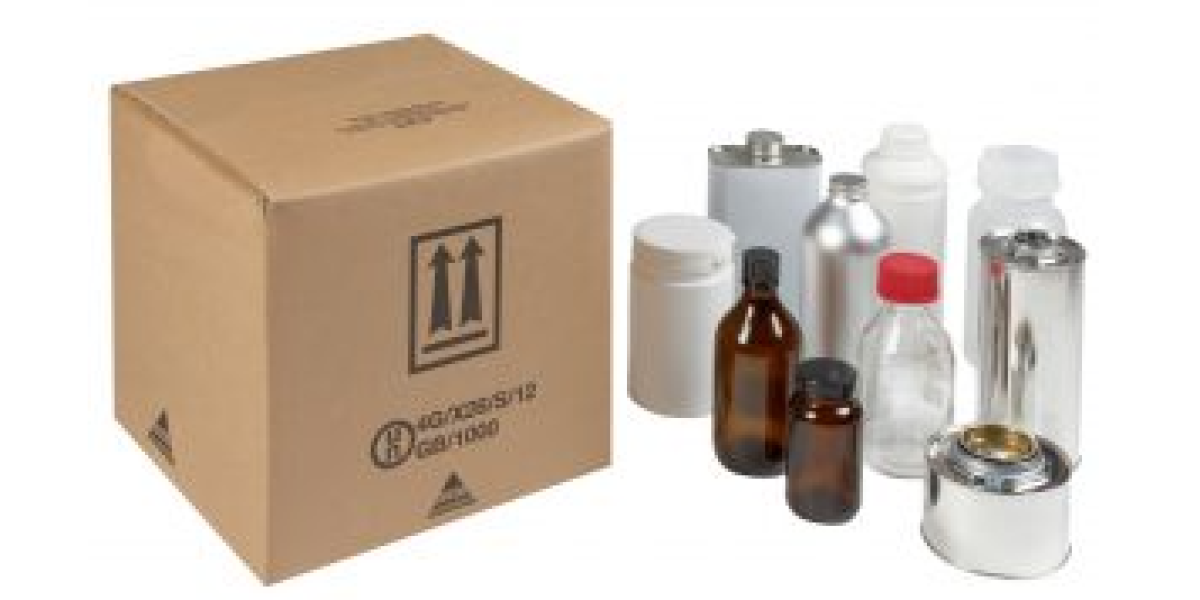
For over 45 years Air Sea Containers, a Birkenhead-based specialist in the manufacturing and supply of UN-approved packaging for dangerous goods, serving shippers across the UK and beyond. Its range covers the packaging that moves hazardous materials safely by road, rail, sea and air, from fibreboard boxes and combination packs to specialist solutions for lithium batteries, diagnostic specimens and other regulated items.
What sets a company like Air Sea Containers apart is that the packaging is only half the product. The other half is the evidence behind it: design-type, testing facility, certification and the technical knowledge to help customers choose the right pack for the right substance. That combination of manufacturing and testing expertise under one roof is what made the visit so valuable for us.
You can find out more at airseadg.com.
Our visit: dropping packages for real
We would like to say many thanks to our wonderful hosts of the day Kevin Dougherty and Rachel Smith. You both did an excellent job and are so thoughtful..thank you samosa’s.
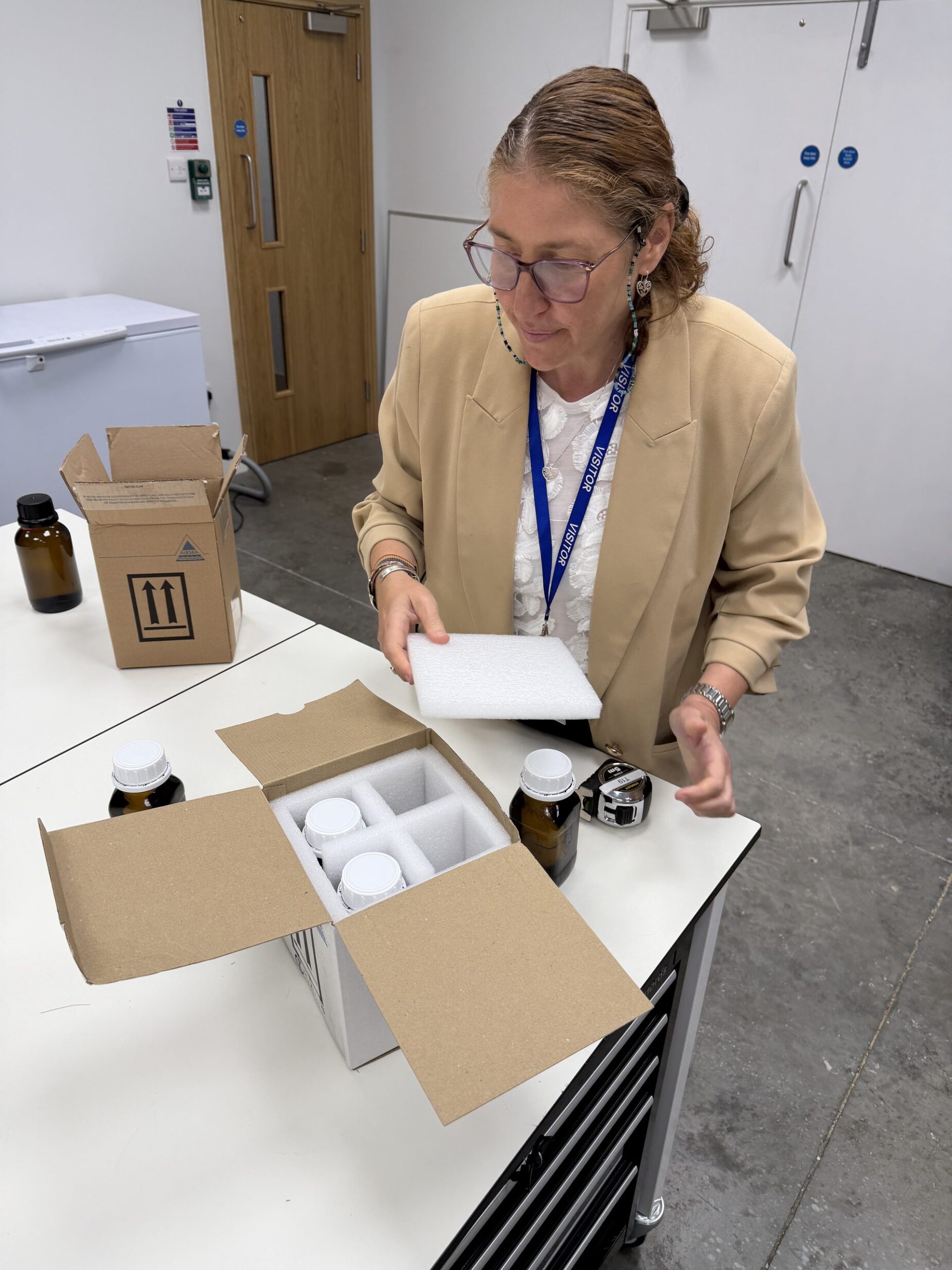
Kevin talked me through the processes in the testing lab and the importance of recording everything from the temperature and humidity to treble checking the height of the testing rig for the drop test. First I had to understand the density of the liquid to appropriately work out the drop test height. After a quick demonstration I set off to prepare my first ever drop test package: 1 UN Fibreboard box (4G), Foam inserts, 4 sealed glass bottles, and of course taped to perfection.
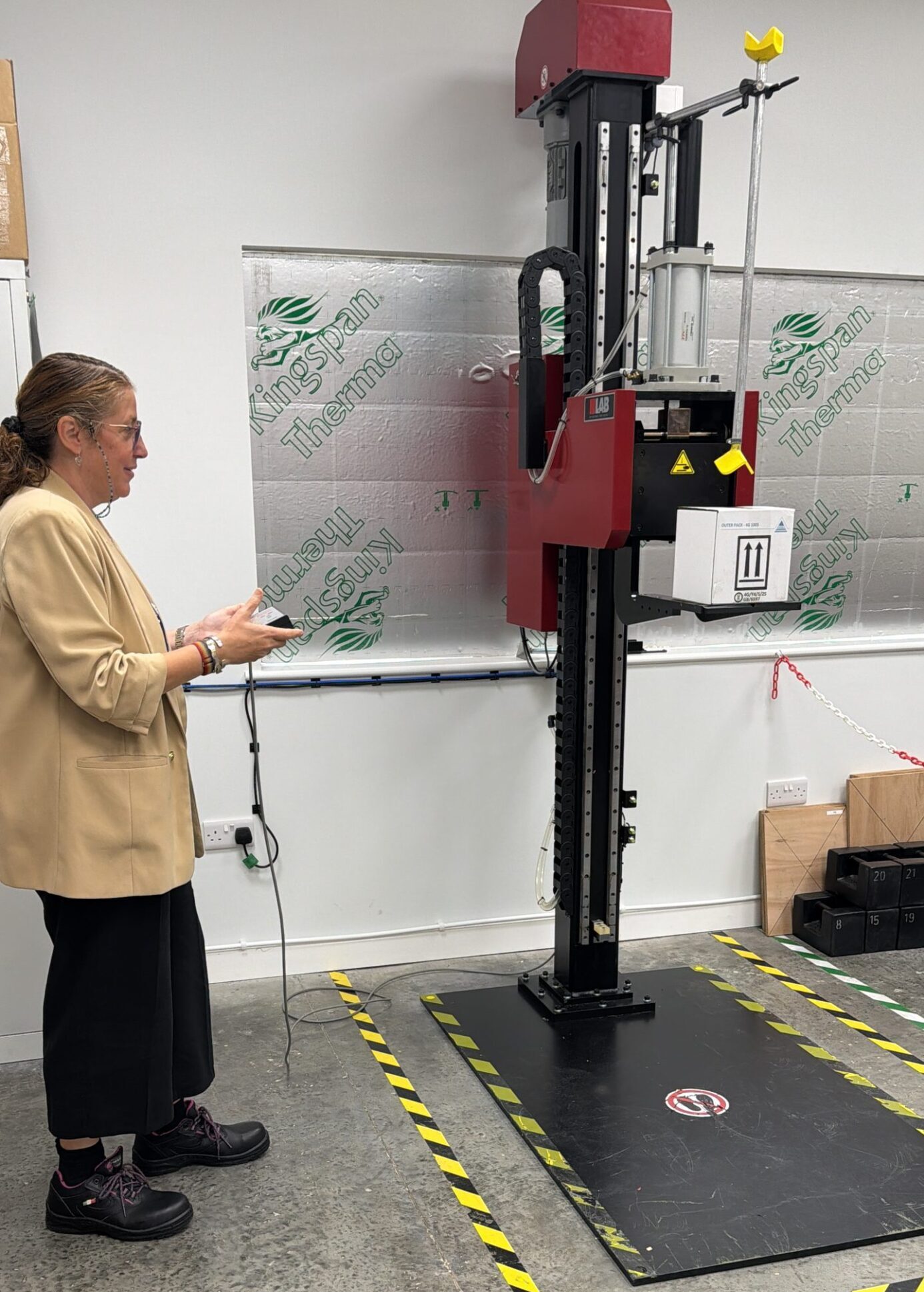
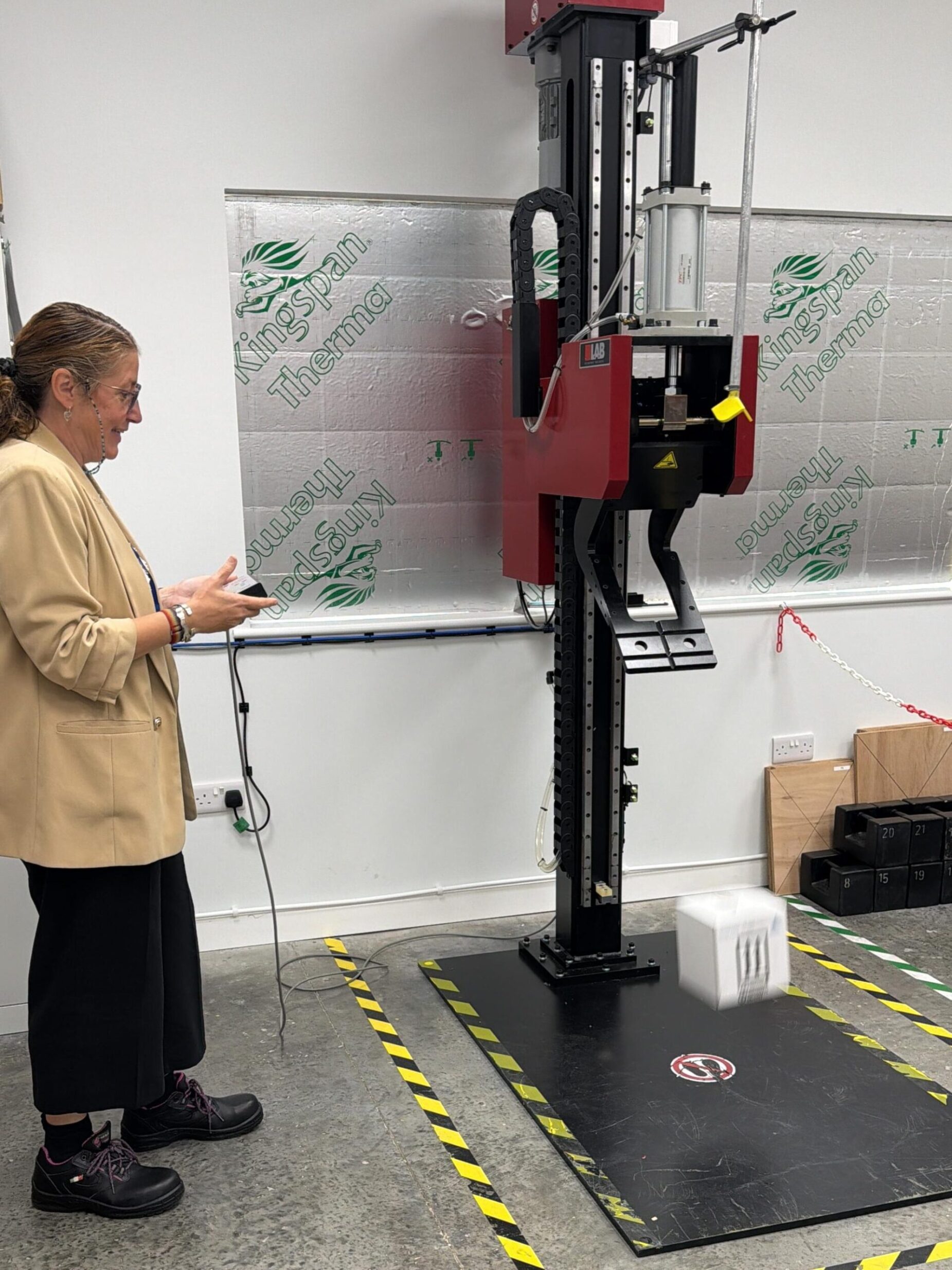
We set to work on preparing the rig (well Kevin did) I held the tape measure. After carefully placing my prepared package on the rig I was handed the controls. Learning I had to press 2 button simultaneously (that was stressful) I dropped my perfectly prepared package to the floor.
What a success my package and contents survived !
Why UN packaging tests matter
UN performance tests prove that a packaging design can survive the knocks, stacking and pressure changes of real transport without releasing its contents. A leak of a flammable, toxic or corrosive substance can injure handlers, damage vehicles and aircraft, and harm the environment. Testing takes that risk out of guesswork.
The tests come from the UN Recommendations on the Transport of Dangerous Goods (the Model Regulations), and are written into every modal rulebook: ADR for road, RID for rail, the IMDG Code for sea and the ICAO Technical Instructions and IATA DGR for air. A pack that passes is approved once and recognised across all of them.
Packaging is tested to one of three performance levels, matched to the packing group of the goods:
| Marking | Packing Groups it may carry | Degree of Danger |
|---|---|---|
| X | I, II and III | High, Medium and Low |
| Y | II and III | Medium and Low |
| Z | III Only | Low |
Once a design passes, the competent authority issues an approval and the packaging carries the UN specification mark. In the UK this is administered by the Vehicle Certification Agency (VCA) on behalf of the Department for Transport. A typical mark for a fibreboard box reads:
4G/Y25/S/26/GB/VCA1234
That means: fibreboard box (4G), tested to packing group II performance (Y), maximum gross mass 25 kg, intended for solids or inner packagings (S), made in 2026, approved in Great Britain, followed by the manufacturer or approval reference. Each part of that mark is a promise backed by a test report.
One point we stress on our courses: the approval covers the pack as tested. Changing the inner packagings, cushioning, closures or tape can invalidate it, and shippers must follow the manufacturer’s closing instructions every time.
The tests explained
The drop test is the headline act, but it is one of several tests a design may face, depending on the packaging type and whether it will carry liquids or solids.
| Test | What it simulates | Key requirements (approximate summary) |
|---|---|---|
| Drop | Packages falling from vehicles, forklifts or conveyors | Onto a rigid, flat, non-resilient surface. Heights for solids, and liquids of relative density up to 1.2: 1.8 m (PG I), 1.2 m (PG II), 0.8 m (PG III). Higher-density liquids are dropped from proportionally greater heights |
| Stacking | Weight of other cargo in a warehouse or hold | A load equal to identical packages stacked to 3 m, held for 24 hours. Plastic packagings for liquids: 28 days at 40 °C |
| Leakproofness | Seepage from seams and closures | For packagings intended for liquids. Pressurised under water: 30 kPa (PG I), 20 kPa (PG II and III) |
| Internal pressure (hydraulic) | Pressure changes in transit and at altitude | For packagings intended for liquids. At least 250 kPa for PG I; at least 100 kPa for PG II and III, or higher depending on the vapour pressure of the contents |
Preparation is just as important as the test itself. Packagings are filled as they would be for transport, often with a substitute of similar properties. Plastic drums and jerricans are cooled to −18 °C or below before dropping, because plastics become more brittle in the cold. Fibreboard is conditioned in a controlled atmosphere, typically 23 °C and 50% relative humidity, for at least 24 hours.
For a fibreboard box, five samples are dropped, each in a different orientation: flat on the bottom, flat on the top, on the long side, on the short side and on a corner. A pass means no loss of contents. Some damage to the outer box is acceptable, provided nothing escapes and the pack would still be safe to carry.
The figures above are a summary for readers. The authoritative detail sits in Chapter 6.1 of the UN Model Regulations and the matching chapters of ADR, the IMDG Code and the ICAO and IATA air regulations.
What this means for shippers
The consignor carries the legal responsibility for using the right packaging, and using it correctly. Watching a package hit the floor at Air Sea was a powerful reminder of why that matters. In practice, shippers should:
- Check the UN mark matches the packing group, mass and physical state of what is being shipped
- Use exactly the inner packagings, cushioning and closures the pack was tested with
- Follow the manufacturer’s assembly and closing instructions every time
- Keep packaging test reports or certificates available, and ask suppliers for them
- Train staff so they understand what the mark means, not just where to find it
Final thoughts
Our thanks to the team at Air Sea for their time, hospitality and expertise. Seeing the science behind UN packaging first hand will make our training sharper and our advice more practical.
Logicom Hub provides dangerous goods training and consultancy across road, sea and air, including support with packaging selection and compliance. If you would like help with your packaging, your training needs or your Dangerous Goods Safety Adviser (DGSA) obligations, get in touch.