 Skip to content


In 2024, container ships caught fire 250 times. That’s a decade high. And a growing share of those fires trace back to the same source: lithium-ion batteries loaded as invisible cargo, with no declaration, no documentation, and no placarding.
If you ship, manufacture, distribute, or forward dangerous goods by sea, this affects you directly. A regulatory change is now on the table at the International Maritime Organization, and it will reshape how you handle lithium-ion batteries. Here’s why the change matters — and why it’s overdue.
What SP188 Is and Why It Matters
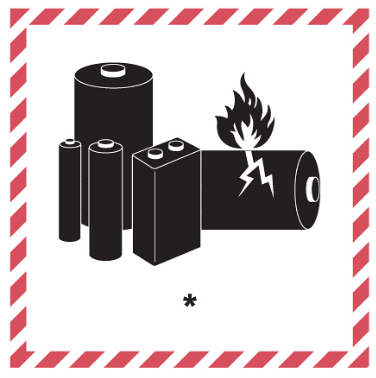
Special Provision 188 sits inside the IMDG Code. It grants an exemption. Ship small lithium cells and batteries below a certain energy25
The threshold is specific. Cells must not exceed 20Wh. Batteries must not exceed 100Wh. Stay under those limits and SP188 lets your cargo move as ordinary freight.
On paper, that sounds reasonable. Small batteries, low risk, less red tape. But there’s a gap in the wording that turns a sensible exemption into a serious hazard.
The Loophole: A Full Container of Batteries, Zero Notification
Here’s the problem. SP188 caps the energy of each individual cell and battery. It sets no limit on how many you can pack into a single container.
Read that again. A shipper can fill an entire container transport unit (CTU) with thousands of individual lithium-ion batteries — every one of them technically compliant with SP188 — and load it aboard a vessel with no dangerous goods declaration whatsoever.
The master of the ship doesn’t know it’s there. The crew can’t plan for it. Firefighting teams have no idea a thermal-runaway risk is sitting three decks down. The IMO’s CCC-12 submission, co-sponsored by Member States and the International Group of P&I Clubs, names this exact flaw: SP188 has no CTU-level quantity limit.
That’s not a paperwork inconvenience. That’s a firefighting blind spot on a vessel carrying thousands of tonnes of cargo and a crew with nowhere to run.
The Incidents That Prove the Point
This is not a theoretical risk. The record is already written in real ships and real casualties.
Consider the MV Fremantle Highway. On 25 July 2023, the car carrier caught fire in the North Sea off the Netherlands. One crew member died. The vessel nearly sank. Investigators linked the blaze to electric vehicles and lithium-ion batteries aboard.
Less than a year later, on 22 July 2024, the container ship Maersk Frankfurt caught fire near Karwar, India — another lithium-linked incident on a major trade lane.
Then there’s the misdeclaration problem. In August 2021, a container labeled “computer parts” — actually packed with discarded lithium batteries — caught fire en route to the Port of Virginia. The US Coast Guard issued a safety alert in March 2022. When cargo isn’t declared, nobody can prepare for what it does when it fails.
The NTSB reinforced the point in its December 2025 investigation. Improperly secured lashing belts allowed 41 lithium-ion battery energy storage system units to shift inside cargo holds, triggering two separate cargo hold fires. Poor securing plus undeclared or under-managed battery cargo is a recipe repeated across incident after incident.
Each of these cases shares a common thread. When the crew doesn’t know what’s on board, they can’t stow it correctly, monitor it, or fight it effectively.
What CINS Is Proposing
The Cargo Incident Notification System (CINS) has put forward a fix, and it’s now before the IMO’s Carriage of Cargoes and Containers (CCC) sub-committee.
The CINS Recommendation Paper identifies the recurring culprits directly: misdeclaration, packaging deficiencies, battery quality issues, and the unlimited accumulation of SP188 batteries in a single container. The proposed reforms target the gap head-on:
- Cap SP188 relief at 20kg gross battery mass per CTU. Below that threshold, the existing relief continues to apply.
- Require full IMDG Chapter 5.4 declaration above the threshold. Ship more than 20kg per unit, and you declare it as dangerous goods — full documentation, full transparency.
- Restore visibility. The master and crew know what’s aboard, where it’s stowed, and how to respond if it fails.
The logic is simple. Small quantities keep their relief. Large accumulations become visible cargo with proper controls. The exemption stays useful without staying dangerous. Thanks to the British Association of Dangerous Goods professionals for sending out the update on the CINS action.
Who’s Backing the Reform
This isn’t a lone submission. The proposals carry weight because of who stands behind them.
Several Flag States support the change. So do influential NGOs, including ICHCA. The International Group of P&I Clubs — the bodies that ultimately pay when a vessel burns — co-sponsored the CCC-12 submission highlighting the missing CTU quantity limit.
When the insurers, the flag administrations, and the cargo-safety specialists all point at the same gap, the industry should listen.
What This Means for You
If you’re a shipper, manufacturer, distributor, freight forwarder, or carrier, prepare now. Don’t wait for the rule to land.
- Audit your battery shipments. Know exactly how much lithium-ion battery mass sits in each CTU today, even under the SP188 exemption.
- Fix declaration discipline. Misdeclaration is a leading cause of these fires. “Computer parts” is not an acceptable description for a container of batteries.
- Train your team on the incoming threshold. A 20kg-per-CTU cap changes how you classify, document, and declare. Get ahead of it before your first rejected shipment.
- Review your packaging and securing. Shifting cargo starts fires. Proper lashing and packaging isn’t optional.
Get this right and you avoid rejected shipments, port delays, and the far graver cost of a fire at sea. Get it wrong and you’re the undeclared container the crew never saw coming.
The Case Against — and Why It Doesn’t Hold
Some will argue the reform adds cost and administrative burden to a battery trade that is largely uneventful. That’s fair to raise. Most SP188 shipments do arrive without incident.
But the exemption was never meant to shield unlimited quantities. It was written for genuinely small consignments where the aggregate risk stayed low. A container packed wall-to-wall with lithium-ion batteries is not a small consignment — it’s a concentrated hazard wearing an exemption it was never designed to carry. The 20kg cap doesn’t abolish the relief. It restores the relief to its intended scope.
Close the Gap Before the Next Fire
Two hundred and fifty fires in a single year is not a run of bad luck. It’s a pattern. And the SP188 loophole is one of the clearest, most fixable contributors to it.
The CINS proposals are proportionate, evidence-backed, and supported by the people who understand the risk best. They deserve to pass.
If your operation moves lithium-ion batteries by sea, don’t treat this as someone else’s regulatory debate. Review your shipments, tighten your declarations, and make sure your team understands what compliance will look like when the threshold changes. Stay compliant, stay safe — and make sure the next container the crew loads isn’t the one that catches fire.
If you have any questions regarding the movement of your lithium batteries, please do not hesitate to contact the team at Logicom Hub Ltd 0330 912 5041 / [email protected]