 Skip to content

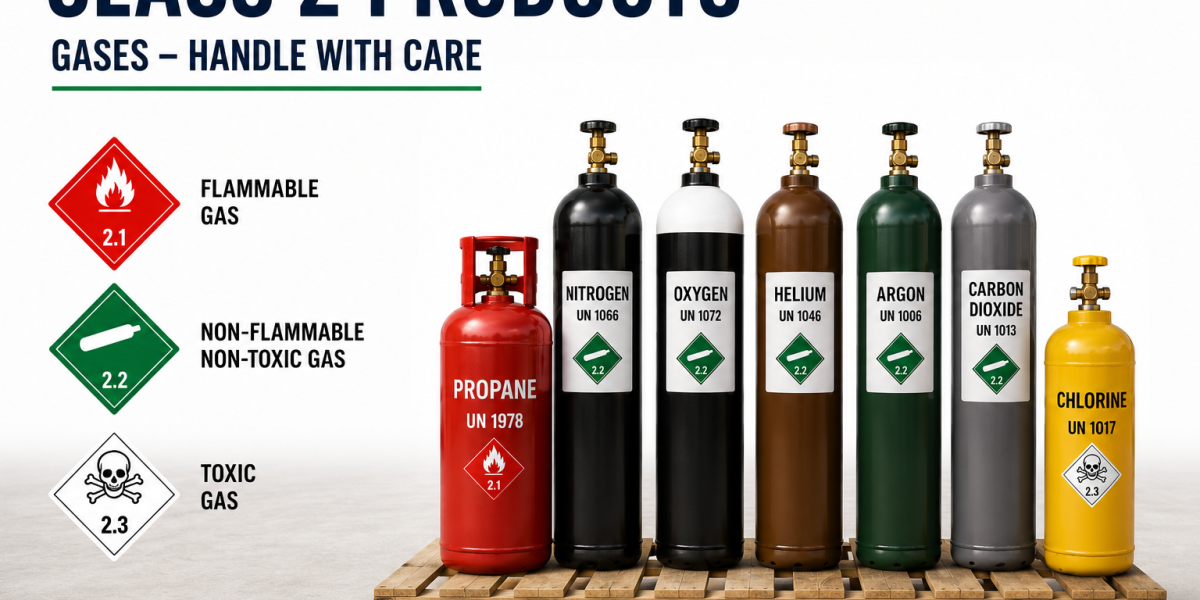
Class 2 Dangerous Goods – Gases, one of the most commonly transported categories of hazardous materials.
In our previous blog, we explored Class 1 Dangerous Goods – Explosives. If you missed it, check out our previous blog here before continuing our series covering all 9 Classes of Dangerous Goods.
What are Class 2 Dangerous Goods?
Class 2 Dangerous Goods include gases that can present significant risks during transport. These risks may include fire, explosion, toxicity, corrosion, or asphyxiation depending on the type of gas being carried.
Dangerous Goods Regulations define a gas as a substance that:
- Has a vapour pressure of 300 kPa or greater at 50°C, or
- Is completely gaseous at 20°C under standard atmospheric pressure.
Because gases are normally transported under pressure to reduce their volume, they require careful handling, appropriate packaging, and correct labelling.
Types of Class 2 Gases
Class 2 Dangerous Goods include several different types of gases.
Compressed Gases
A compressed gas is a gas which, when packaged under pressure for transport, remains entirely in the gaseous state at -50°C.
Example: Compressed Nitrogen (UN 1066), Compressed Air (UN 1002), Helium (UN 1046).
Liquefied Gases
A liquefied gas is partially liquid when packaged under pressure at temperatures above -50°C.
Liquefied gases are divided into:
- High-pressure liquefied gases – Critical temperature between -50°C and +65°C.
- Low-pressure liquefied gases – Critical temperature above +65°C.
Examples: LPG, Propane and Butane.
Refrigerated Liquefied (Cryogenic) Gases
These gases are cooled to extremely low temperatures so they become partially liquid during transport.
Examples: Liquid Nitrogen, Liquid Oxygen and Liquid Helium.
Dissolved Gases
A dissolved gas is transported under pressure after being dissolved in a liquid solvent.
Example: Acetylene (UN 1001), which is dissolved in acetone inside specially designed cylinders.
Absorbed Gases
An absorbed gas is transported after being absorbed into a solid porous material within the cylinder.
These specialised cylinders reduce the hazards associated with transporting certain gases.
Why are Class 2 Gases Regulated?
Although many gases are used safely every day, they can become extremely dangerous during transport if not handled correctly.
Potential hazards include:
- Fire and explosion
- High-pressure cylinder rupture
- Toxic effects
- Corrosive damage
- Oxygen displacement leading to asphyxiation
- Oxidising properties that can intensify fires
High-pressure cylinders store significant amounts of energy. If damaged or exposed to excessive heat, they can rupture violently or, in some cases, result in a BLEVE (Boiling Liquid Expanding Vapour Explosion).
Class 2 Divisions
Class 2 is divided into three hazard divisions based on the primary risk presented during transport.
Division 2.1 – Flammable Gases
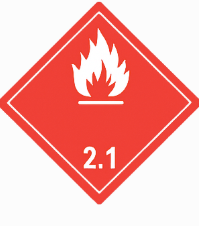
Flammable gases ignite easily in air and can contribute to or intensify fires.
Examples include:
- Propane
- Butane
- Acetylene
- LPG
- Many aerosol products
If exposed to heat, cylinders containing flammable gases may rupture or result in a BLEVE.
Division 2.2 – Non-Flammable, Non-Toxic Gases
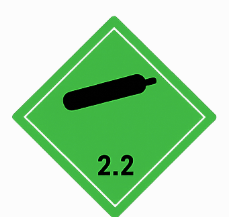
These gases do not burn and are not toxic, but they can still present serious hazards.
They may:
- Be stored under very high pressure.
- Act as oxidising gases, increasing the intensity of fires.
- Displace oxygen and cause suffocation in confined spaces.
Examples include:
- Oxygen
- Nitrogen
- Carbon Dioxide
- Helium
- Some aerosol products containing creams or pastes
Division 2.3 – Toxic Gases
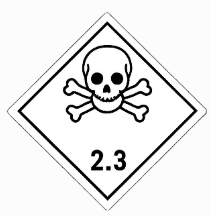
Toxic gases present the highest level of hazard within Class 2.
Exposure through inhalation or contact can cause serious injury, illness, or death to humans and animals.
Examples include:
- Chlorine
- Phosgene
- Hydrogen Sulphide
Because of their extreme hazard, Division 2.3 gases are generally not permitted on passenger aircraft.
Subsidiary Risks and Precedence
Some gases present more than one hazard. When this happens, the Dangerous Goods Regulations apply a precedence system.
The order of precedence is:
- Division 2.3 – Toxic Gases
- Division 2.1 – Flammable Gases
- Division 2.2 – Non-Flammable, Non-Toxic Gases
This ensures the most significant hazard is identified and communicated during transport.
Labelling Requirements
Every package or cylinder containing Class 2 Dangerous Goods must display the correct hazard label.
The label immediately identifies whether the gas is:
- 2.1 Flammable Gas (Red)
- 2.2 Non-Flammable, Non-Toxic Gas (Green)
- 2.3 Toxic Gas (White)
Correct labelling helps transport operators, warehouse staff, emergency responders and regulatory authorities identify the hazards quickly and handle the shipment safely.
Need Dangerous Goods Training?
Whether you transport gases by air, road or sea, understanding the requirements for Class 2 Dangerous Goods is essential for compliance and safety.
At Logicom Hub, we provide expert Dangerous Goods Training through classroom, virtual, in-house and E-Learning courses, helping individuals and businesses remain compliant with the latest regulations.
If you have any questions about shipping Class 2 Dangerous Goods or would like advice on the most suitable training course, contact our friendly team on 0330 912 5041 or email [email protected].
You can also view our upcoming courses: