 Skip to content
Competency Based Training (CBTA) for Air Dangerous Goods: What Employers Must Do Now
Competency-based training and assessment (CBTA) has been mandatory for air dangerous goods since January 1, 2023. If your training program hasn’t been updated to reflect ICAO’s requirements, you are already non-compliant — and a certificate alone won’t protect you in an audit.
This guide covers what CBTA requires, what you must do as an employer, and how to build an evidence file that stands up to scrutiny.
What Is CBTA and Why Does It Apply to Air DG?
CBTA shifts the focus from what employees have been taught to what they can actually do. Under the ICAO Technical Instructions for the Safe Transport of Dangerous Goods by Air, training must be mapped to specific job functions — not job titles — and competence must be demonstrated through assessment, not just course completion.
For air dangerous goods covering Classes 1–9, that distinction is critical. A theoretical understanding of classification rules is not the same as correctly labelling a lithium battery shipment under pressure. CBTA exists to close that gap.
Your Obligations as an Employer
ICAO places the compliance burden on you. Here is what that means in practice:
- Identify every job function in your operation that involves air dangerous goods — acceptance, preparation, documentation, handling, and loading.
- Map training content to those functions. Generic training delivered to a job title is not sufficient.
- Implement a structured assessment plan that evaluates competence both during training and in the workplace.
- Gather and retain valid evidence — written assessments, practical observations, and workplace checklists — in a dangerous goods process file.
- Ensure skills transfer to the job. Passing an exam is not the same as performing a task correctly under real conditions.
- Repeat every 24 months. ICAO mandates recurrent training and reassessment on that cycle.
CBTA vs. Traditional Training: The Key Differences
| Traditional Training | Competency Based Training (CBTA) |
|---|---|
| Based on job title | Based on job Function |
| Borad, generalised content | Tailored to specific tasks |
| Single end-of course exam | Continous assessment throughout |
| Certificate = proof of completion | Evidence file = proof of competence |
| Knowledge-focused | Knowledge + skills + demonstrationed performance |
Two employees with the same job title may perform entirely different dangerous goods functions. Their training and assessment should reflect that. Map training to what people actually do — not what their contract says.
What Evidence of Competence Looks Like
Without a documented evidence file, you cannot demonstrate CBTA compliance. Build yours before training starts — not after. Acceptable evidence includes:
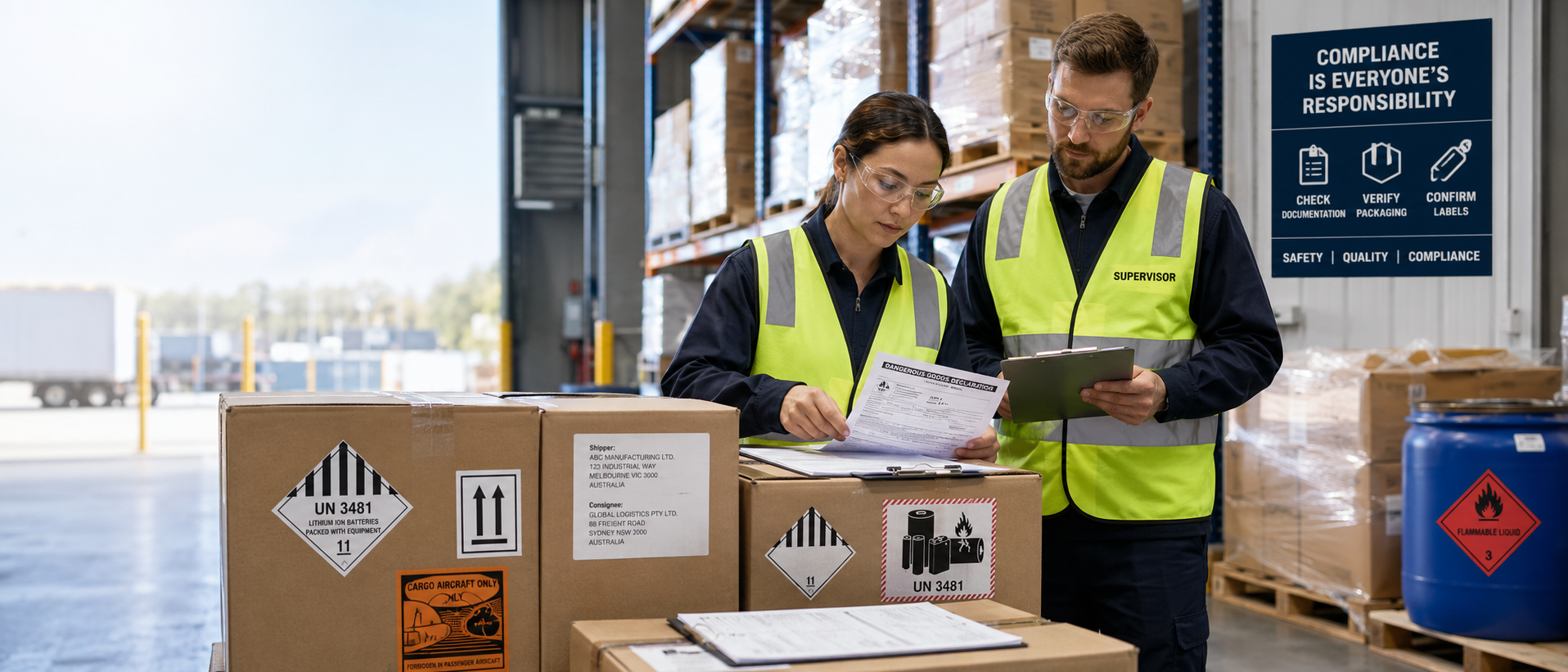
- Written assessments covering classification, procedures, and regulatory knowledge
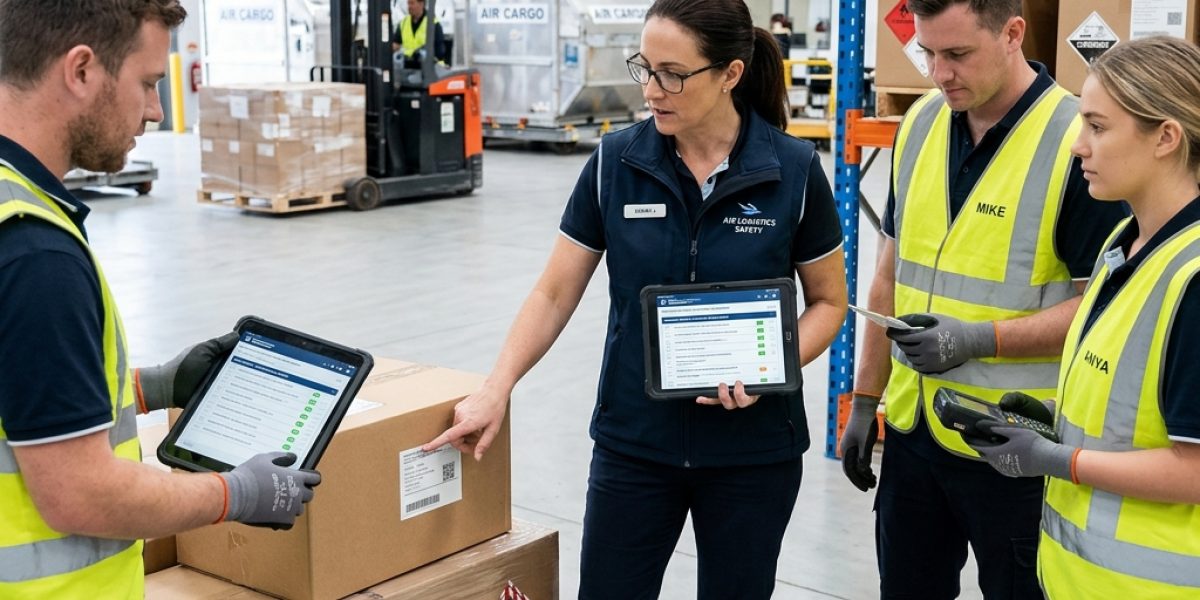
- Practical observations of employees performing tasks in the workplace, confirmed by a qualified assessor
- Workplace checklists recording task completion to the required standard
- Portfolio evidence showing ongoing, consistent performance over time
Design your assessment tools and file structure in advance. Evidence gathering should be part of the normal workflow, not an administrative scramble before an audit.
Using a Third-Party Assessor
If your organisation doesn’t have a qualified in-house assessor, appoint a third party. ICAO’s framework explicitly accommodates this. Logicom Hub can conduct workplace assessments on your behalf — observing employee performance, evaluating it against ICAO competency standards, and producing the documented evidence you need.
Third-party assessment is particularly valuable for organisations new to CBTA, smaller teams without specialist expertise, or those handling complex dangerous goods categories. Confirm that any external assessor understands both the ICAO requirements and your specific operational context. Generic assessment that doesn’t reference your actual job functions won’t hold up under scrutiny.
Implement Your CBTA Program: A Practical Sequence
- Audit your current training against ICAO CBTA requirements and identify the gaps.
- Map job functions across every role that touches air dangerous goods.
- Align training content to those functions with your training provider.
- Design assessment tools — written tests, observation checklists, evidence templates — before training begins.
- Train or appoint your assessors.
- Run training and gather evidence systematically at each stage.
- Build your dangerous goods process file and confirm records are complete and retrievable.
- Set a review cycle tied to the 24-month recurrent training requirement.
To you would like to find out more about IATA Dangerous Goods Regulations and how it works read our other blog
Work With Logicom Hub on Your CBTA Program
Logicom Hub provides expert-led dangerous goods training and third-party competency assessment across air, road, sea, and rail. We support you from job function mapping through evidence file completion — and help you maintain compliance through every recurrent training cycle.
Contact us at [email protected] or visit our services page to discuss what your CBTA program needs.