 Skip to content

Class 4 Dangerous Goods – Flammable Solids, Spontaneously Combustible & Dangerous When Wet Materials
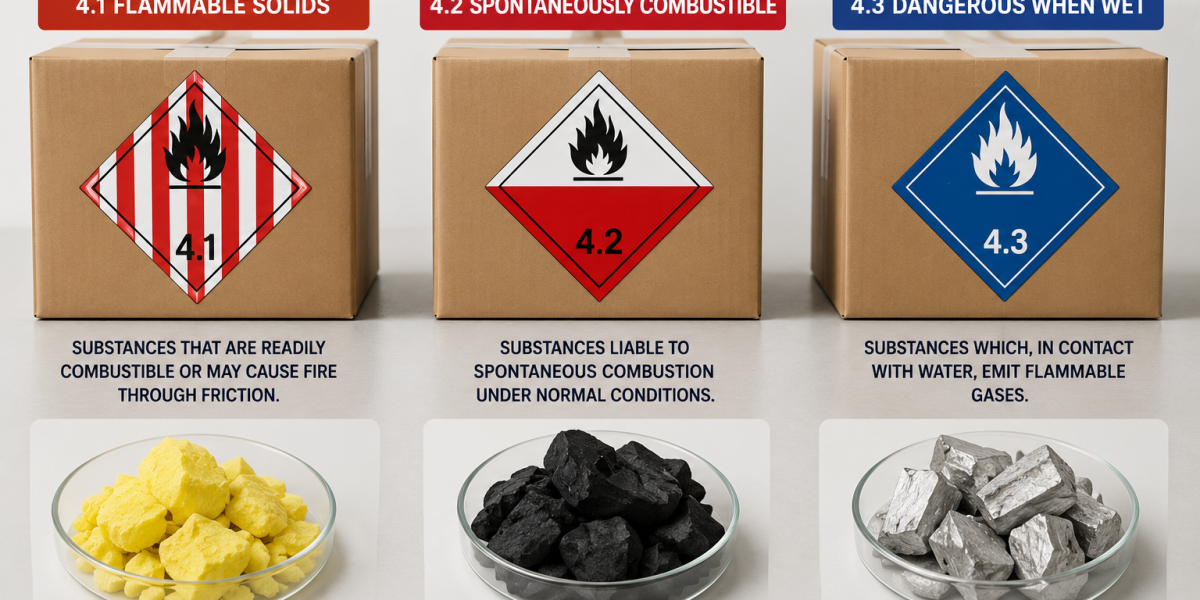
Class 4 Dangerous Goods include substances that can ignite easily, self-heat during transport, or react dangerously when exposed to water
In our previous blog, we explored Class 3 Dangerous Goods – Flammable Liquids. If you missed it, check out our previous blog here before continuing our series covering all 9 Classes of Dangerous Goods.
What are Class 4 Dangerous Goods?
These materials present significant transport hazards because they can start fires through friction, spontaneous combustion or by releasing flammable gases.
Class 4 Dangerous Goods are divided into three hazard divisions:
- Division 4.1 – Flammable Solids
- Division 4.2 – Substances Liable to Spontaneous Combustion
- Division 4.3 – Substances Which, in Contact with Water, Emit Flammable Gases
Why are Class 4 Dangerous Goods Regulated?
Many Class 4 substances appear harmless during storage but can become extremely dangerous during transport.
Potential hazards include:
- Rapid Ignition
- Fire Caused by Friction
- Self-heating leading to spontaneous combustion
- Release of flammable gases when in contact with water
- Fire spread involving other cargo
- Difficult firefighting conditions
Correct classification, packaging, labelling and handling help minimise these risks and ensure compliance with international Dangerous Goods Regulations
Division 4.1 – Flammable Solids
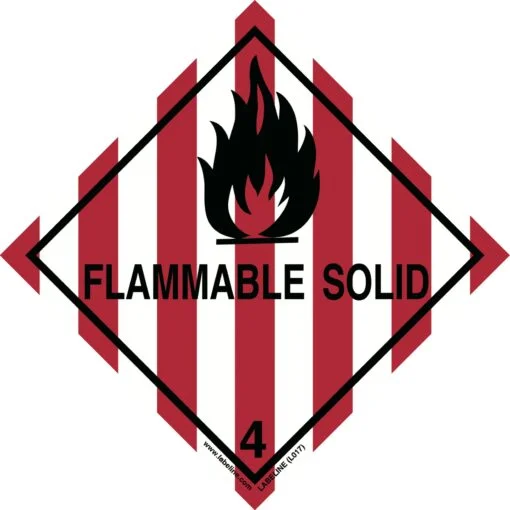
Division 4.1 includes substances that are readily combustible under normal transport conditions or may cause or contribute to fire through friction.
It also includes:
- Self-Reactive Substances
- Polymerizing Substances
- Solid Desensitized Explosives
Examples Include:
Sulphur
Safety Matches
Firelighters
Polyester Resins
Naphthalene (Moth Balls)
Certain metal powders, including aluminium powder, present additional hazards because traditional extinguishing agents such as carbon dioxide may increase the fire risk.
Self-reactive substances are thermally unstable and can undergo rapid exothermic decomposition without the presence of oxygen.
Solid desensitized explosives, such as nitrocellulose, have been treated with water or alcohol to reduce their explosive properties during transport.
Division 4.2 – Substances Liable to Spontaneous Combustion
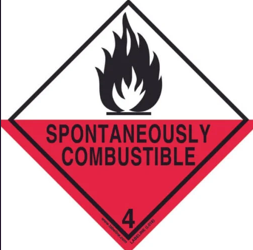
Division 4.2 covers substances capable of igniting without an external ignition source.
These are divided into two categories.
Pyrophoric Substances
Pyrophoric substances ignite within five minutes of exposure to air, even in very small quantities.
Examples include:
White Phosphorus
Self-Heating Substances
Self-heating substances react slowly with oxygen in the air, generating heat over time. Large quantities may eventually ignite without an external heat source.
Examples include:
- Carbon
- Copra
- Cotton Seed
Division 4.3 – Dangerous When Wet
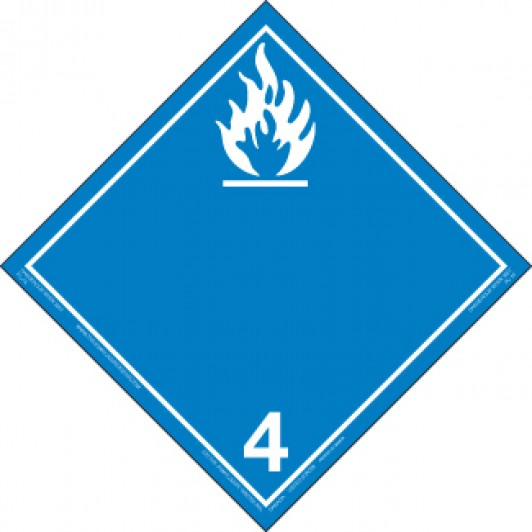
Division 4.3 includes substances that react with water to release flammable gases, usually hydrogen.
These gases can ignite quickly, creating serious fire or explosion hazards.
Because water can worsen the situation, selecting the correct firefighting media is essential during an emergency.
Examples include:
Lithium
Sodium
Zinc Dust
Calcium Carbide
Calcium carbide is commonly transported for the production of acetylene gas.
Labelling Requirements
Every package containing Class 4 Dangerous Goods must display the correct hazard label.
| Label | Description |
|---|---|
| 4.1 | Flammable Solid |
| 4.2 | Spontaneously Combustible |
| 4.3 | Dangerous When Wet |
Correct labelling enables transport operators, warehouse staff, emergency responders and regulatory authorities to identify hazards quickly and handle shipments safely.
Need Dangerous Goods Training?
Whether you transport Dangerous Goods by air, road or sea, understanding the requirements for Class 4 Dangerous Goods is essential for compliance and safety.
At Logicom Hub, we provide expert Dangerous Goods Training through classroom, virtual, in-house and E-Learning courses, helping individuals and businesses remain compliant with the latest regulations.
If you have any questions about shipping Class 4 Dangerous Goods, or would like advice on the most suitable training course, contact our friendly team on 0330 912 5041 or email [email protected].
- You can also view our upcoming courses: