 Skip to content

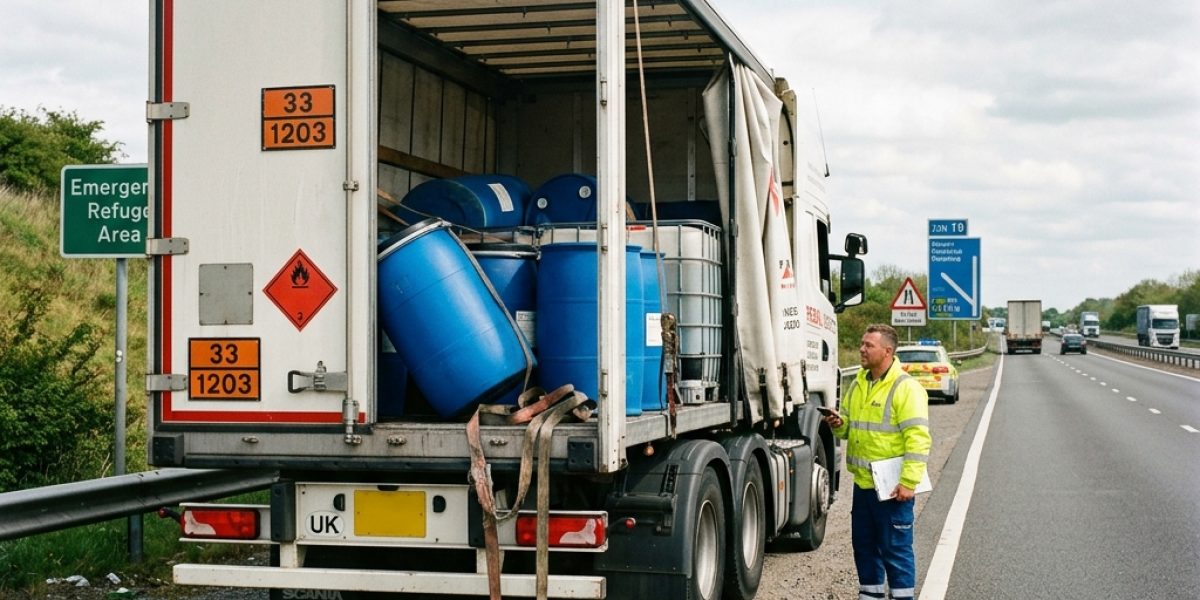
Accidents and Incidents Involving Dangerous Goods
Quick answer: Dangerous Goods Accidents can cause fires, chemical spills, explosions and environmental contamination — with serious human, financial and legal consequences. Most incidents stem from human error, poor handling or inadequate training. Proper ADR Driver Training is the most effective way to reduce that risk.
When a dangerous goods transport goes wrong, the consequences don’t stay on the hard shoulder. A ruptured tanker can close a motorway for hours. A chemical spill can poison a watercourse. A fire can threaten lives and property far beyond the vehicle itself.
These aren’t hypothetical risks. They’re the reason ADR regulations exist and why training is mandatory. Understanding what can go wrong — and why — is essential for anyone who transports hazardous loads.
This post looks at the causes and consequences of dangerous goods incidents, and shows how proper ADR training keeps them from happening.
What causes dangerous goods accidents?
Most dangerous goods incidents don’t come from freak events. They come from preventable errors. Understanding the common causes is the first step to avoiding them.
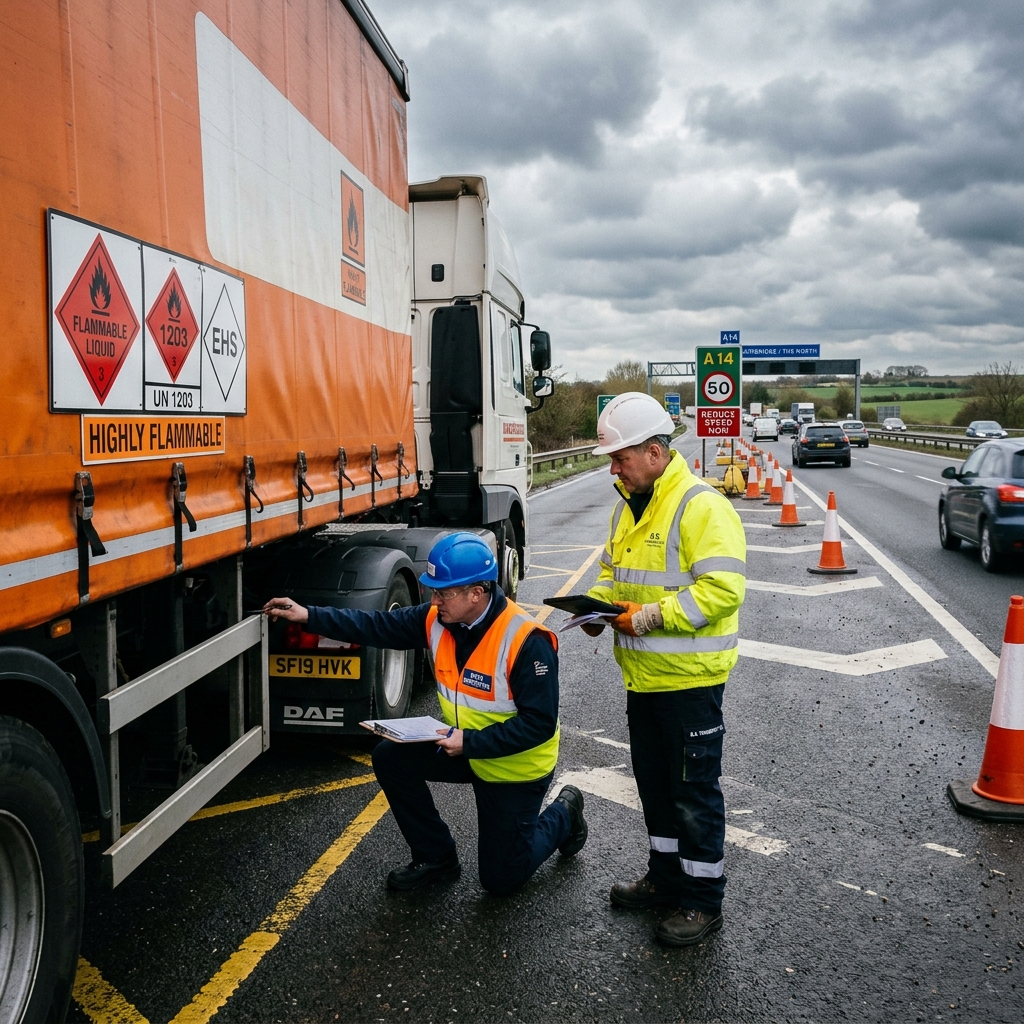
Here are the main culprits:
- Human error: The single biggest cause. Misjudged manoeuvres, fatigue, distraction and poor decision-making account for a large share of incidents.
- Incorrect loading or securing: A load that shifts, leaks or spills in transit is a serious hazard. Proper securing and segregation are critical.
- Poor classification or labelling: If goods are wrongly classified or labelled, everyone down the chain — including emergency responders — is working with bad information.
- Inadequate training: A driver who doesn’t understand the risks of their cargo can’t manage them. Gaps in knowledge lead directly to gaps in safety.
- Vehicle or equipment failure: Poorly maintained vehicles and tanks can fail, causing leaks or worse.
Notice the pattern. Nearly every cause on this list is preventable — and training addresses each one directly.
What are the consequences of dangerous goods accidents?
The fallout from a dangerous goods incident is severe and wide-reaching. It hits people, the environment and the bottom line all at once.
Human impact. This is the gravest consequence. Fires, explosions and toxic releases can injure or kill drivers, other road users and members of the public. Emergency responders are put at risk too.
Environmental impact. A single spill can contaminate soil, waterways and air. Chemicals that reach a river can devastate wildlife and pollute drinking water supplies. Clean-up can take months and cause lasting damage.
Financial impact. The costs stack up fast — emergency response, clean-up, vehicle and cargo loss, compensation, and regulatory fines. Add road closures and business disruption, and a single incident can run into enormous sums.
Legal and reputational impact. Operators face prosecution, fines and prohibition notices for non-compliance. A serious incident can also destroy a company’s reputation and cost it future contracts.
One incident. Four kinds of damage. That’s what’s at stake every time a dangerous goods vehicle takes to the road.
How proper ADR training reduces risk
Look back at the causes of dangerous goods accidents. Now look at what ADR training covers. They line up almost perfectly.
That’s not a coincidence. ADR Driver Training is designed specifically to eliminate the errors that cause incidents. Here’s how:
- It tackles human error. Training builds the knowledge and instinct to handle hazardous loads correctly, reducing the risky guesswork that causes accidents.
- It teaches correct loading and handling. Drivers learn how to check that loads are properly classified, secured and segregated before they move.
- It embeds emergency response. Practical exercises — including fire extinguisher drills and emergency procedures — prepare drivers to act fast and correctly when something goes wrong.
- It ensures accurate documentation. Trained drivers understand the paperwork, labelling and markings that keep the whole safety chain working.
The result is a driver who prevents incidents before they start and contains them when they can’t be avoided. That’s the difference between a near miss and a catastrophe.
Get qualified with our ADR Driver Training course
The best way to reduce dangerous goods risk is to put trained drivers behind the wheel. Our new ADR Driver Training course does exactly that.
Delivered by experienced industry professionals, the course gives drivers a clear, practical understanding of how to handle dangerous goods safely — from correct loading and securing to emergency response. Practical exercises make sure you don’t just learn the theory; you’re ready to act when it counts.
Choose the course that suits your role:
- 3.5-Day Initial ADR Training (£505 including VAT) — Core, Packages and Hazard Classes 2, 3, 4, 5, 6, 8 & 9.
- 5-Day Initial ADR Training (£600 including VAT) — Core, Packages, Tanks and Hazard Classes 2, 3, 4, 5, 6, 8 & 9.
Examination fees are included, and eligible training can count towards your Driver CPC hours. Courses run from a central location in Rugby, with in-house delivery available at your own premises subject to DVSA approval — ideal for training a whole fleet at once.
The bottom line
Dangerous goods accidents are rarely bad luck. They’re the result of preventable errors — and every one of those errors is something ADR training addresses head-on. The human, environmental and financial stakes are simply too high to leave to chance.
Reduce your risk before an incident forces the issue. If you are involved in a dangerous goods incident you must notify the Department of Transport by filing an incident report. For more information on how to file the report read the Incident Guidance Notice.
To become a Dangerous Goods ADR Driver: Book your ADR Driver Training course today and put the knowledge in place that keeps dangerous goods moving safely. Feel free to contact the team at Logicom Hub on 0330 912 5041 or email: [email protected] for more information.