 Skip to content

Dangerous Goods on UK Roads – The Scale of the Challenge?
Quick answer: Dangerous goods are substances that pose a risk to people, property or the environment during transport — fuels, gases, chemicals, explosives and more. Millions of tonnes move across UK and European roads every year, classified under UN Classes 1 to 9. That sheer volume is exactly why ADR Driver Training is essential.
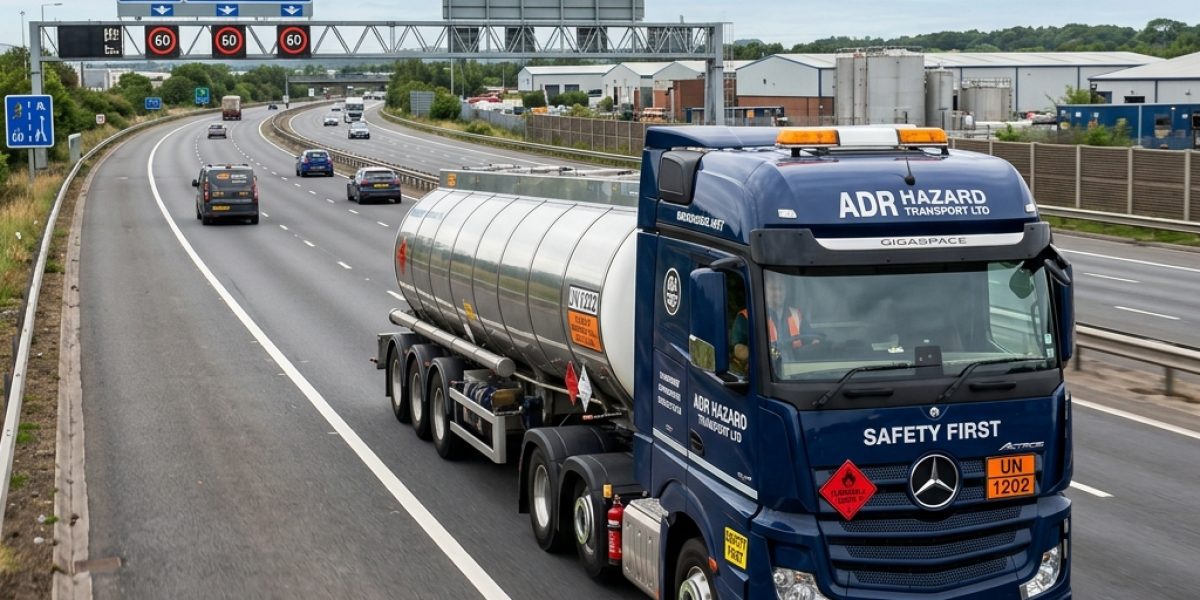
Every day, tankers of fuel, containers of chemicals and cylinders of gas share the road with ordinary traffic. Most journeys pass without incident. That’s not luck — it’s the result of strict regulation and properly trained drivers.
But the scale is easy to underestimate. Dangerous goods aren’t a niche cargo handled by a handful of specialists. They move constantly, across every major route, in enormous quantities. Understanding that scale is the first step to understanding why ADR Driver Training matters so much.
This post breaks down what counts as dangerous goods, how they’re classified, and why the volume on our roads makes trained drivers non-negotiable.
What counts as dangerous goods?
Dangerous goods are any substances or articles that can harm people, property or the environment during transport. If it can burn, explode, poison, corrode or contaminate, it likely falls under dangerous goods regulations.
That covers a huge range of everyday cargo. Petrol and diesel. Industrial chemicals. Compressed gases. Paints and solvents. Fertilisers. Batteries. Even some cosmetics and aerosols. Many products you’d never think twice about are classified as dangerous goods once they’re moved in bulk.
The point is this: dangerous goods aren’t rare or exotic. They’re the fuel in your local forecourt and the chemicals in the factory down the road. And every one of those loads needs handling correctly.
What are the classes of dangerous goods?
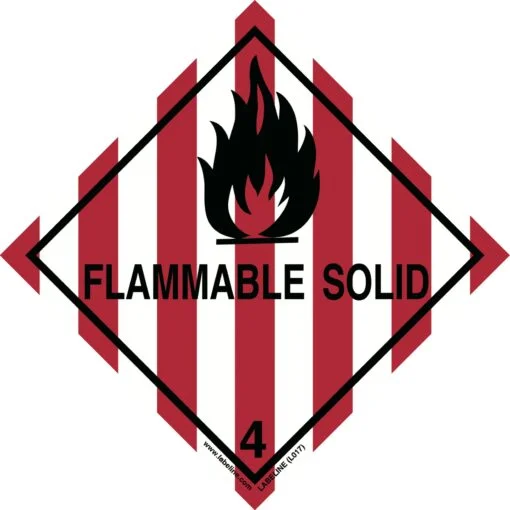
Dangerous goods are sorted into nine classes under the UN classification system. Each class groups substances by the type of hazard they pose. Knowing them is core to ADR training.
| Class | Type of dangerous goods |
|---|---|
| Class 1 | Explosives |
| Class 2 | Gases |
| Class 3 | Flammable liquids |
| Class 4 | Flammable solids |
| Class 5 | Oxidising substances |
| Class 6 | Toxic substances |
| Class 7 | Radioactive materials |
| Class 8 | Corrosive substances |
| Class 9 | Miscellaneous dangerous substances |
Each class carries its own risks, handling rules and emergency procedures. A flammable liquid behaves nothing like a radioactive material or a corrosive acid. That’s why ADR training covers the core principles first, then the specific classes you’ll actually carry.
How much dangerous goods travel on our roads?
The volume of dangerous goods on roads is staggering. Millions of tonnes of dangerous goods move across UK and European roads every single year. Road is the dominant method for moving hazardous materials, far ahead of rail, sea or air for domestic journeys.
Think about what keeps the country running. Every petrol station needs regular fuel deliveries by tanker. Every hospital needs medical gases. Every farm needs fertiliser and fuel. Every factory needs a steady supply of chemicals. That demand never stops, which means dangerous goods are on the move around the clock.
And demand is growing. As logistics networks expand and more sectors rely on hazardous materials, the need for ADR-certified drivers keeps rising. More loads means more journeys — and more drivers who need to be qualified to make them safely.
Why the volume of dangerous goods makes training essential
Here’s the plain maths. More dangerous goods on the road means more opportunities for something to go wrong. Every journey is a potential incident if the driver isn’t trained to prevent one.
Scale multiplies risk. A single untrained driver handling a full tanker of flammable liquid is a serious hazard — to themselves, other road users and everyone nearby. Multiply that across thousands of daily journeys and the importance of proper training becomes obvious.
ADR Driver Training is the control that keeps this system safe. It ensures every driver moving hazardous loads understands the risks, follows the rules and knows how to respond in an emergency. Without that baseline of competence, the sheer volume of dangerous goods on our roads would be unmanageable.
Training isn’t a box to tick. It’s what makes large-scale dangerous goods transport possible in the first place.
Get qualified with our ADR Driver Training course
If you’re moving dangerous goods on UK roads— or planning to — our new ADR Driver Training course gives you the qualification you need to do it safely and legally.
Delivered by experienced industry professionals, the course gives you a clear, practical grasp of the dangerous goods classes, the regulations that govern them, and the correct procedures for handling each type. You’ll cover the core syllabus plus the specific hazard classes relevant to your work.
We offer two initial course options:
- 3.5-Day Initial ADR Training (£505 including VAT) — Core, Packages and Hazard Classes 2, 3, 4, 5, 6, 8 & 9.
- 5-Day Initial ADR Training (£600 including VAT) — Core, Packages, Tanks and Hazard Classes 2, 3, 4, 5, 6, 8 & 9.
Specialist Class 1 (Explosives) and Class 7 (Radioactive Materials) modules are also available. Examination fees are included, and eligible training can count towards your Driver CPC hours. Courses run from a central location in Rugby, with in-house delivery available at your premises subject to DVSA approval.
The bottom line
Dangerous goods are everywhere on our roads — in vast quantities, across every class of hazard, every day of the year. That scale is exactly why trained drivers matter. The system stays safe because qualified people keep it that way.
If you drive dangerous goods, your ADR certification is what makes you part of that solution.
For more information, please have a look at the Department of Transport website on Becoming and ADR driver and when you are ready Book your ADR Driver Training course to get qualified to carry hazardous loads with confidence.
Dangerous goods on UK roads
Dangerous Goods on UK roads