 Skip to content

Industrial Hazardous Material Training: Why Industry-Specific Training Matters
Introduction
Hazardous materials are handled every day across a wide range of industries, from manufacturing and construction to healthcare, pharmaceuticals, logistics and energy. Although the materials and risks may differ between sectors, one thing remains the same: employees need the right knowledge and training to work safely.
A generic awareness course may provide a useful introduction, but organisations that regularly handle hazardous materials often require training that reflects the actual substances, processes, equipment and responsibilities found within their workplace.
Industrial-focused hazardous material courses helps employees understand the risks they are likely to encounter, the procedures they are expected to follow and the regulations that apply to their role. By making training relevant to the workplace, businesses can strengthen compliance, reduce risk and build a more confident safety culture.
Why Hazardous Material Training Should Reflect Your Industry
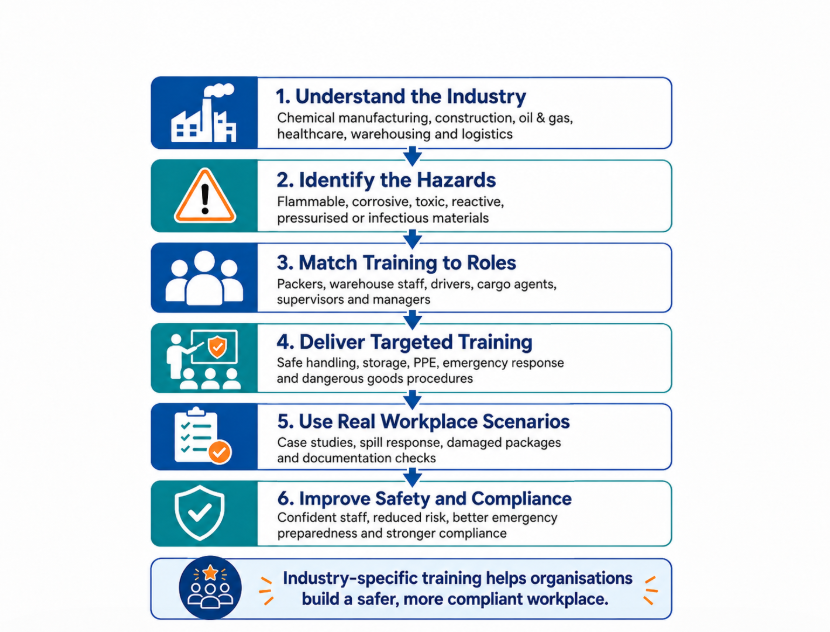
Every industry faces different hazards. The materials used in a chemical manufacturing facility are very different from those found in a hospital, construction site or pharmaceutical warehouse. Training therefore needs to take account of the actual working environment.
Understanding Industry-Specific Hazards
Employees should understand the hazards associated with the substances they work with or may encounter during their role.
Depending on the industry, these could include:
- Flammable liquids and gases
- Corrosive substances
- Toxic chemicals
- Oxidising materials
- Compressed gases
- Biological substances
- Lithium batteries
- Radioactive materials
- Hazardous waste
- Substances dangerous to the environment
When training uses examples that employees recognise from their workplace, it becomes easier for them to understand how the regulations and safety procedures apply to their everyday responsibilities.
Supporting Regulatory Compliance
Businesses that handle hazardous materials may need to comply with several different areas of legislation and regulation.
Requirements can relate to:
- Workplace health and safety
- Chemical storage
- Personal Protective Equipment
- Fire and explosion risks
- Hazardous waste
- Dangerous Goods transport
- Emergency planning
- Environmental protection
Where materials are classified as Dangerous Goods for transport, additional requirements may apply depending on whether they are being moved by air, road or sea.
This can include requirements for:
- Classification
- Packaging
- Marking
- Labelling
- Documentation
- Handling
- Loading and unloading
- Staff training
Appropriate training helps employees understand which responsibilities apply to their role and why those requirements are important.
What Is Industrial-Focused Hazardous Material Training?
Industrial-focused hazardous training is designed around the hazards, activities and responsibilities found within a particular organisation or sector.
Instead of relying entirely on generic examples, training can be tailored to reflect the situations employees are more likely to encounter.
Tailored Training Content
Training can be adapted to cover the specific materials, processes and risks relevant to an organisation.
For example, employees working within a chemical manufacturing facility may require detailed knowledge of chemical compatibility and storage, while warehouse staff may need a greater focus on identifying damaged packages, handling dangerous goods and responding to leaks.
Relevant training makes it easier for learners to connect what they are being taught with what they actually do at work.
Realistic Workplace Scenarios
Case studies and practical examples can help employees understand how hazardous material incidents may occur.
These could include:
- A leaking chemical container
- A damaged lithium battery
- Incorrect storage of incompatible substances
- A spill during loading or unloading
- Incorrect hazard labels
- An employee discovering undeclared Dangerous Goods
- A fire involving flammable materials
Working through realistic situations helps employees develop better judgement and gives them confidence when responding to real incidents.
Role-Specific Training
Not every employee needs the same level of training. The requirements for someone packing Dangerous Goods may be very different from those of a warehouse operative, driver, administrator or employee accepting cargo. Training should therefore reflect the person’s responsibilities. This helps prevent employees from being overwhelmed with information that is not relevant to their role while ensuring they receive enough knowledge to carry out their duties safely.
Benefits of Industry-Specific Hazardous Material Training
Better Risk Awareness
Employees who understand the hazards associated with the materials they work with are more likely to recognise unsafe situations.
They may be able to identify:
- Incorrectly stored substances
- Damaged packages
- Missing labels
- Signs of leakage
- Incompatible materials stored together
- Incorrect documentation
- Unsafe handling practices
Early identification of these issues can help prevent more serious incidents. HSE explains how employers should assess and control exposure to hazardous substances. HSE COSHH guidance
Improved Compliance
Training helps employees understand not only what they are required to do, but why those requirements exist. When staff understand the purpose behind procedures, they are more likely to follow them correctly and consistently. This can support stronger compliance across the organisation.
Greater Confidence
Employees can sometimes feel uncertain when dealing with unfamiliar hazardous materials.
Industry-relevant training gives them clearer guidance on:
- What hazards to look for
- What procedures to follow
- When to stop work
- Who to report concerns to
- What to do during an emergency
Confidence is particularly important when employees need to make quick decisions.
Improved Emergency Preparedness
Different hazardous materials require different emergency responses. The correct response to a flammable liquid spill may not be appropriate for a substance that reacts dangerously with water. Training should therefore prepare employees for the types of incidents that could realistically occur in their workplace.
This may include:
- Spill response
- Fire procedures
- Evacuation
- First aid
- Isolation of damaged packages
- Reporting procedures
- Contacting emergency services
Employees who understand emergency procedures are more likely to respond quickly and appropriately.
Hazardous Material Training Across Different Industries
Chemical Manufacturing and Processing
Chemical manufacturing environments may involve large quantities of hazardous substances, complex processes and the potential for dangerous reactions.
Training may cover:
- Chemical properties
- Compatibility
- Safe transfer procedures
- Storage
- Spill control
- PPE
- Emergency response
- Dangerous Goods transport requirements
The objective is to ensure employees understand both the substances they are working with and the processes used to control them.
Construction and Demolition
Construction sites can contain a wide range of hazardous materials.
These may include:
- Fuels
- Solvents
- Paints
- Adhesives
- Compressed gases
- Chemicals
- Contaminated materials
- Hazardous waste
Training can help workers identify potential hazards and understand safe storage, handling and disposal procedures.
Oil and Gas
The oil and gas sector regularly handles highly flammable substances, gases and chemicals.
Training may focus on:
- Flammable atmospheres
- Ignition sources
- Pressurised gases
- Chemical exposure
- Safe storage
- Spill response
- Fire safety
- Dangerous Goods transportation
Because incidents involving these materials can escalate rapidly, strong emergency preparedness is particularly important.
Healthcare and Pharmaceuticals
Hospitals, laboratories, pharmaceutical manufacturers and healthcare organisations may handle:
- Chemicals
- Compressed gases
- Infectious substances
- Diagnostic specimens
- Dry ice
- Pharmaceutical products
- Hazardous waste
Employees may require specific training depending on whether they are handling, packaging, storing or transporting these materials. For example, the transport of infectious substances may be subject to Dangerous Goods Regulations that require specific packaging, marking and labelling.
Warehousing and Logistics
Warehouses and distribution centres may encounter many different classes of Dangerous Goods.
Employees may need to understand:
- Hazard labels
- Package markings
- Segregation
- Storage requirements
- Damaged packages
- Leaks and spills
- Loading and unloading procedures
- Documentation
Training is particularly important because warehouse staff may encounter hazardous products from many different suppliers.
Online Hazardous Material Training
Online training has become an increasingly important option for organisations that need to train employees across different locations.
E-Learning can provide a flexible way for employees to complete training without the need for everyone to attend a classroom course at the same time.
Flexible Learning
Online courses allow employees to complete training around their existing workload.
This can be particularly useful for businesses with:
- Multiple locations
- Shift workers
- Remote employees
- Large teams
- International operations
Interactive Learning
Modern E-Learning does not have to mean simply reading information on a screen.
Courses can include:
- Videos
- Interactive exercises
- Scenarios
- Knowledge checks
- Images
- Assessments
- Practical examples
These features can help employees remain engaged and reinforce key information.
Training Records and Certification
Online training platforms can also make it easier for organisations to manage training records.
Depending on the course, organisations may be able to track:
- Completion dates
- Assessment results
- Certificates
- Renewal dates
- Learner progress
This can help businesses demonstrate that appropriate training has been provided.
Choosing the Right Hazardous Material Training
Before selecting a course, organisations should consider what their employees actually do.
Questions to ask include:
- What hazardous materials do we handle?
- Are any of these materials classified as Dangerous Goods for transport?
- How are the materials transported?
- What responsibilities do our employees have?
- Do employees pack, mark, label or document Dangerous Goods?
- Do they load or unload vehicles?
- Are they responsible for accepting shipments?
- Do they only require awareness training?
- Are there specific risks within our workplace?
- Are refresher courses required?
The answers will help determine the appropriate level and type of training. It is also important to understand the difference between Dangerous Goods Awareness training and training that qualifies employees to perform specific Dangerous Goods functions. Awareness training is designed to help employees recognise hazards and understand basic responsibilities. It does not automatically qualify someone to classify, pack, mark, label or prepare Dangerous Goods documentation.
Building a Stronger Safety Culture
Training should not simply be treated as something employees complete to obtain a certificate. Effective hazardous material training should become part of a wider safety culture.
Employees should feel confident to:
- Ask questions
- Report damaged packages
- Raise safety concerns
- Stop unsafe activities
- Check procedures
- Refer to Safety Data Sheets
- Report near misses
- Seek advice when they are unsure
When employees understand the risks and feel confident speaking up, organisations are better positioned to identify problems before they result in accidents.
Conclusion
Hazardous material training is most effective when it reflects the realities of the workplace. Different industries encounter different substances, processes and risks, so training should be appropriate to both the organisation and the employee’s role.
By investing in relevant training, businesses can improve hazard awareness, strengthen compliance, prepare employees for emergencies and reduce the likelihood of incidents involving hazardous materials.
Whether your organisation works in manufacturing, construction, healthcare, pharmaceuticals, logistics, oil and gas or another sector, ensuring your employees receive appropriate hazardous material and Dangerous Goods training should be an important part of your overall safety strategy.
Need Hazardous Material or Dangerous Goods Training?
At Logicom Hub, we provide Dangerous Goods training designed to help businesses and individuals understand their responsibilities and work confidently with hazardous materials. Our training options include classroom, virtual, in-house and E-Learning courses, with training available for the transport of Dangerous Goods by air, road and sea.
If you are unsure which course is appropriate for your employees, speak to our team and we can help you identify the right level of training.
0330 912 5041
[email protected]
Don’t get fined, build Dangerous Goods minds.