 Skip to content


Navigating UK Legislation on Hazardous Material Training
Introduction
In the realm of hazardous materials, ensuring proper hazardous material training is not only a matter of best practice but a legal imperative.
The UK boasts a robust legal framework to regulate the handling, storage and transportation of hazardous materials. This blog delves into the intricacies of navigating legislation on hazardous material training, offering a comprehensive review of the legal landscape and emphasising the importance of compliance for the safety of individuals, the environment and overall public wellbeing.
For organisations operating across different industries, hazardous material training can help employees understand the risks, responsibilities and regulations relevant to their role.
The British Legal Framework
1. Health and Safety at Work etc. Act 1974
Overview: The Health and Safety at Work etc. Act 1974 is the cornerstone of health and safety legislation in Great Britain. The Act places a legal duty on employers to ensure the health, safety and welfare of their employees.
Relevance to Hazardous Material Training: Employers must provide adequate information, instruction, training and supervision for employees exposed to workplace risks, helping to ensure they can work safely.
2. Control of Substances Hazardous to Health (COSHH) Regulations 2002
Overview: The Control of Substances Hazardous to Health Regulations 2002, commonly known as COSHH, aim to protect workers from the health risks associated with hazardous substances.
Relevance to Hazardous Material Training: Employers must assess the risks, prevent or control exposure and provide information, instruction and training to employees.
The Health and Safety Executive’s COSHH guidance provides further information on controlling exposure to hazardous substances in the workplace.
3. Dangerous Goods Safety Advisers (DGSA)
Overview: Organisations involved in certain activities relating to the transportation of dangerous goods may be required to appoint a qualified Dangerous Goods Safety Adviser. DGSA requirements form part of the current dangerous goods transport framework, including the Carriage of Dangerous Goods and Use of Transportable Pressure Equipment Regulations 2009 and ADR. The UK Government provides further guidance on employing a Dangerous Goods Safety Adviser.
Relevance to Hazardous Material Training: DGSA requirements highlight the need for specialist knowledge and training for individuals involved in monitoring and advising businesses on the transport of dangerous goods. Logicom Hub also provides Dangerous Goods Safety Adviser training for those preparing to undertake the DGSA examinations.
4. The Carriage of Dangerous Goods and Use of Transportable Pressure Equipment Regulations 2009
Overview: The Carriage of Dangerous Goods and Use of Transportable Pressure Equipment Regulations 2009 set out requirements relating to the carriage of dangerous goods within Great Britain.
Relevance to Hazardous Material Training: The dangerous goods transport framework specifies training requirements for personnel involved in activities such as preparing, packing, loading and transporting dangerous goods.
Businesses can explore Logicom Hub’s range of dangerous goods training courses for further information on training across different modes of transport.
Comprehensive Review of Legislation
1. Employer Responsibilities
Why It Matters: The Health and Safety at Work etc. Act 1974 places the onus on employers to help ensure the safety of their employees.
Key Points: Employers must conduct appropriate risk assessments, implement control measures and provide relevant training to mitigate the risks associated with hazardous materials.
Providing suitable hazardous material training can help employees understand the risks they face and the procedures they are expected to follow.
2. Risk Assessment and Control Measures
Why It Matters: COSHH regulations require employers to assess and control risks posed by substances hazardous to health.
Key Points: Employers must identify and assess the risks, implement appropriate control measures and communicate relevant information to employees through proper training and instruction.
The HSE provides additional guidance on controlling exposure to hazardous substances.
3. Compliance in Transportation
Why It Matters: The Carriage of Dangerous Goods Regulations help ensure the safe transportation of dangerous goods.
Key Points: Training requirements for personnel involved in the transport of dangerous goods emphasise the importance of compliance with applicable safety standards.
The precise requirements depend on factors including the mode of transport, the goods being carried and the responsibilities of the individual.
Logicom Hub offers dangerous goods training covering a range of transport activities.
4. DGSA Qualifications
Why It Matters: Certain organisations involved in transporting dangerous goods are required to appoint a qualified Dangerous Goods Safety Adviser.
Key Points: DGSA requirements stress the need for specialised knowledge for individuals taking on the role of Dangerous Goods Safety Adviser, ensuring they are equipped to fulfil their responsibilities.
DGSAs must pass the required examinations and hold a valid DGSA certificate. Further information is available through the UK Government’s Dangerous Goods Safety Adviser guidance.
Addressing Specific Industry Needs
1. Chemical Manufacturing and Processing
Training Focus: Safe handling, storage and processing of chemical substances and compliance with COSHH regulations.
Key Points: Employees must be trained in the specific hazards associated with the chemicals they handle, including emergency response procedures.
Logicom Hub’s technical safety training courses cover safety systems surrounding dangerous goods, including chemical storage and warehousing.
2. Construction and Demolition
Training Focus: Management of hazardous materials commonly encountered in construction activities and adherence to COSHH regulations.
Key Points: Training should cover the safe handling and management of construction-related hazardous substances, including materials such as asbestos and lead where applicable.
The Health and Safety Executive provides further guidance for the construction industry on managing workplace health and safety risks.
3. Oil and Gas Industry
Training Focus: Safe extraction, handling and transportation of flammable substances, alongside compliance with relevant safety and transportation regulations.
Key Points: Personnel involved in the oil and gas industry may require specialised training on the specific hazards associated with their operations.
Industry-focused hazardous material training can help organisations ensure that training reflects the substances and risks employees encounter in their actual workplace.
4. Healthcare and Pharmaceutical
Training Focus: Safe handling, storage and disposal of pharmaceuticals, biological substances and other hazardous materials, alongside adherence to relevant workplace regulations.
Key Points: Training should cover the unique risks associated with pharmaceuticals, biological materials and medical waste, emphasising compliance with health and safety regulations.
Where healthcare organisations transport regulated biological materials, additional dangerous goods requirements may also apply.
Online Accessibility of Hazardous Material Training
1. Convenient Online Platforms
How It Works: Hazardous material training can be made accessible through online training platforms.
Benefits: Professionals can undergo appropriate training at their convenience, helping to minimise disruption to daily operations.
Logicom Hub offers a range of dangerous goods e-learning courses that allow learners to complete training at their own pace.
2. Interactive Online Modules
How It Works: Online modules can be designed to be interactive, engaging participants with multimedia content, activities and assessments.
Benefits: Increased engagement can enhance the learning experience, helping learners understand how regulations relate to their responsibilities.
At Logicom Hub, our aim is to provide interactive dangerous goods training that helps build confidence in new skills and knowledge.
3. Certification and Training Records
How It Works: Following successful completion of applicable training and assessments, learners can receive evidence of their training or certification, depending on the course requirements.
Benefits: Effective training records can support compliance management and make it easier for organisations to monitor employee training and development.
It is important to recognise that training and certification requirements vary depending on the activity being carried out. Some dangerous goods roles require specific examinations, qualifications or approved training.
Challenges and Solutions
1. Keeping Up with Changes
Challenges: The regulatory landscape can evolve, requiring organisations to stay informed about changes in legislation and dangerous goods regulations.
Solution: Regularly review and update training programmes to reflect current requirements, helping to support ongoing compliance.
Keeping hazardous material training up to date is particularly important where changes to regulations affect an employee’s day-to-day responsibilities.
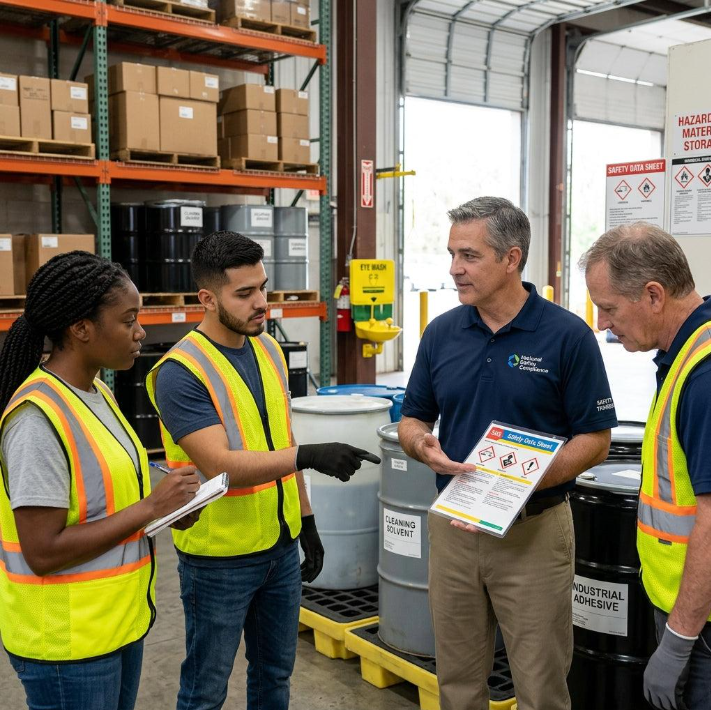
2. Industry-Specific Nuances
Challenges: Different industries may face unique hazards, and complying with industry-specific regulations can add complexity.
Solution: Tailor training programmes to address industry-specific hazards and ensure that training remains relevant to the workforce.
Our guide to industrial-focused hazardous material training explores why training should reflect the specific environment in which employees work.
3. Employee Turnover
Challenges: High employee turnover can pose challenges in maintaining a consistently trained workforce.
Solution: Implement a robust onboarding process and appropriate refresher training to ensure employees receive the necessary knowledge and instruction for their roles.
Conclusion
In conclusion, navigating legislation on hazardous material training in the UK requires a nuanced understanding of the legal framework and industry-specific regulations.
A comprehensive review of the legislation helps organisations and individuals stay compliant with the Health and Safety at Work etc. Act 1974, COSHH regulations, dangerous goods transportation regulations and other relevant requirements.
By embracing online accessibility and addressing industry-specific needs, organisations can streamline their hazardous material training processes. This not only supports compliance with legal requirements but also contributes to a culture of safety, helping to protect personnel and the broader community.
In a landscape where safety is paramount, a commitment to comprehensive and compliant hazardous material training is an investment in the health and sustainability of industries across the UK.
We are experts in legislation surrounding hazardous materials. Our aim is to provide interactive dangerous goods training that builds confidence in new skills and knowledge in all attendees.
You can also explore our e-learning courses and technical safety training to find training suitable for your organisation.
Need help with your hazardous material training requirements?
Call us on 0330 912 5041 or email [email protected] to discuss your training needs.