 Skip to content
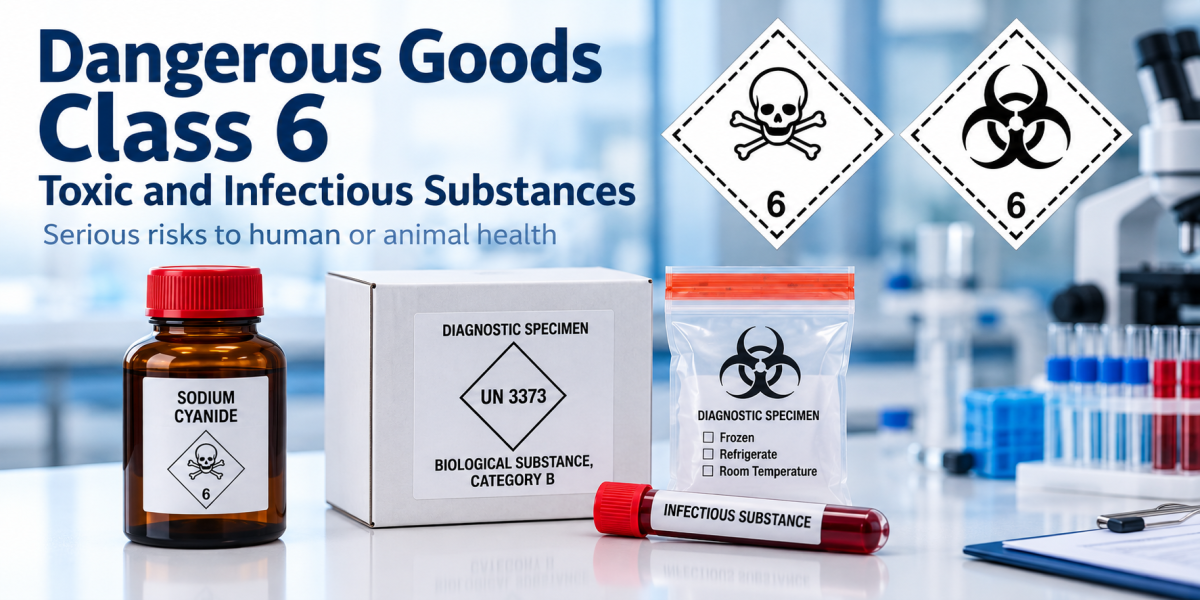
Class 6 Dangerous Goods covers substances that can present serious risks to human or animal health, either through their toxic properties or their ability to cause infection.
In our previous blog, we explored Class 5 Dangerous Goods – Oxidising Substances and Organic Peroxides. We now continue our guide to the 9 Classes of Dangerous Goods with Class 6 – Toxic and Infectious Substances.
What Are Class 6 Dangerous Goods?
Class 6 Dangerous Goods are substances that can cause harm to humans or animals through poisoning, exposure or infection.
Because the hazards presented by toxic chemicals are very different from those presented by infectious materials, Class 6 is separated into two distinct divisions.
Division 6.1 – Toxic Substances
These are substances that can cause serious harm or death if they are swallowed, inhaled or come into contact with the skin.
Division 6.2 – Infectious Substances
These are substances known or reasonably expected to contain pathogens capable of causing disease in humans or animals.
Division 6.1 – Toxic Substances
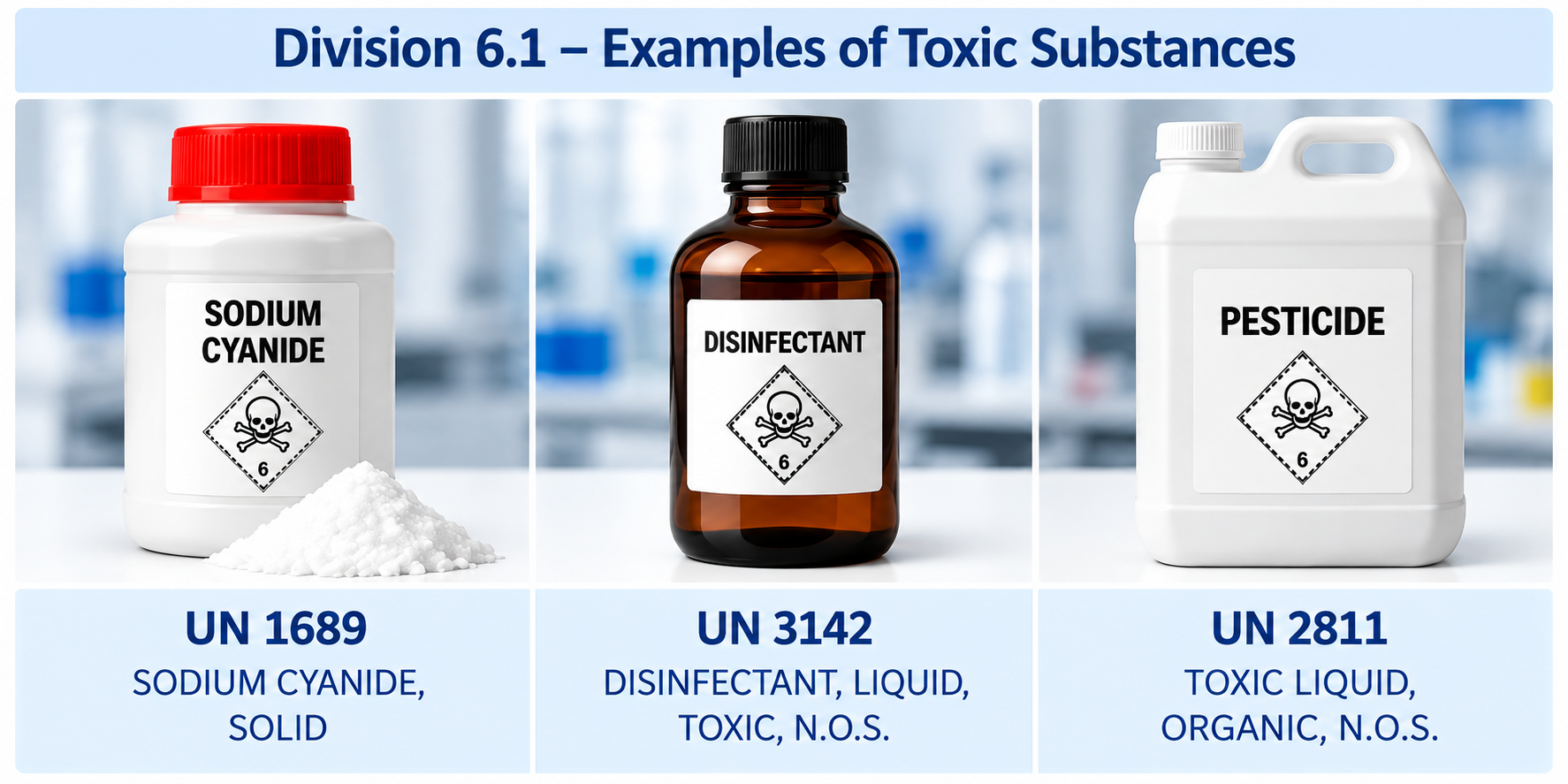
Division 6.1 includes substances that are liable to cause death, serious injury or harm to human health if swallowed or inhaled, or if they come into contact with the skin.
The degree of danger presented by a toxic substance can vary considerably, so correct classification is essential before the goods are packaged or offered for transport.
Examples of substances that may be classified within Division 6.1 include certain:
- Cyanides
- Pesticides
- Disinfectants
- Toxic chemical compounds
- Toxic medicines
- Toxic dyes and intermediates
One example is:
UN 1689 – SODIUM CYANIDE, SOLID
Sodium cyanide is classified as a Division 6.1 toxic substance.
Another example of a Division 6.1 Proper Shipping Name is:
UN 3142 – DISINFECTANT, LIQUID, TOXIC, N.O.S.
Where an N.O.S. (Not Otherwise Specified) entry is used, additional requirements may apply, including the use of an appropriate technical name.
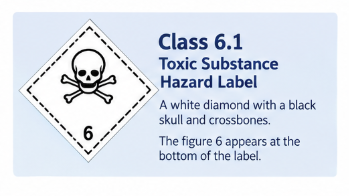
The Division 6.1 Toxic Substance Hazard Label
This label warns anyone handling or transporting the package that the contents present a toxic hazard.
Division 6.2 – Infectious Substances
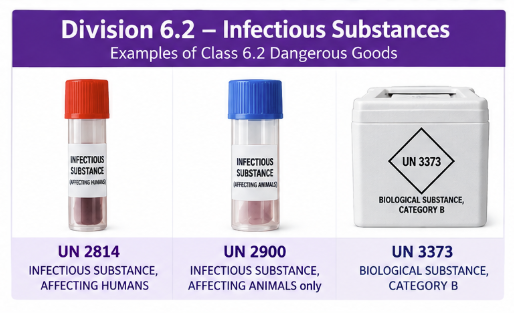
Division 6.2 covers substances known or reasonably expected to contain pathogens.
Pathogens can include microorganisms such as bacteria, viruses, parasites and fungi, as well as other agents capable of causing disease.
Infectious substances are divided into Category A and Category B, depending on the level of risk they present.
Category A Infectious Substances
Category A covers infectious substances transported in a form that, if exposure occurred, could cause permanent disability or life-threatening or fatal disease in otherwise healthy humans or animals.
Depending on whether the infectious substance affects humans or animals, it is assigned one of the following UN numbers and Proper Shipping Names:
UN 2814 – INFECTIOUS SUBSTANCE, AFFECTING HUMANS
This applies to Category A infectious substances that cause disease in humans and animals.
UN 2900 – INFECTIOUS SUBSTANCE, AFFECTING ANIMALS only
This applies to Category A infectious substances that cause disease only in animals.
Category B Infectious Substances
Category B infectious substances are infectious substances that do not meet the criteria for inclusion in Category A.
These substances are assigned:
UN 3373 – BIOLOGICAL SUBSTANCE, CATEGORY B
Category B materials can include certain human or animal specimens being transported for diagnostic, investigational or other purposes.
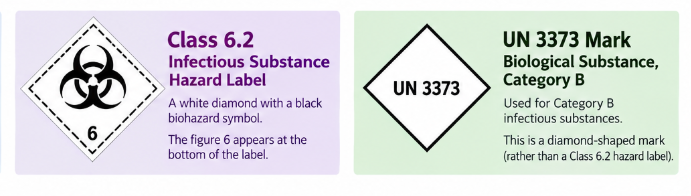
UN 3373 packages use a specific diamond-shaped UN 3373 mark rather than the standard Class 6.2 infectious substance hazard label used for Category A.
Clinical and Medical Waste
Some clinical and medical waste is also classified within Division 6.2.
Depending on its contents and level of infectious risk, different UN numbers may apply.
One important entry is:
UN 3291 – CLINICAL WASTE, UNSPECIFIED, N.O.S.
Alternative permitted Proper Shipping Names can include (BIO) MEDICAL WASTE, N.O.S. and REGULATED MEDICAL WASTE, N.O.S.
Waste containing Category A infectious substances requires a different classification, so it is important that medical or clinical waste is correctly assessed before transport.
The Division 6.2 Infectious Substance Hazard Label
The Division 6.2 hazard label is a white diamond featuring the distinctive black biohazard symbol, with the number 6 at the bottom.
It is used for applicable infectious substances such as Category A shipments assigned to UN 2814 or UN 2900.
The Class 6.2 label should not be confused with the UN 3373 mark used for Biological Substance, Category B.
Packaging Class 6 Infectious Substances
The packaging requirements for infectious substances depend on their classification.
Category A infectious substances assigned to UN 2814 or UN 2900 require packaging appropriate to their higher level of risk.
Category B infectious substances assigned to UN 3373 have different packaging requirements.
Infectious substance packaging commonly uses a multi-layer system designed to prevent the material escaping if a primary receptacle leaks or becomes damaged.
Correct packaging, marking, labelling and documentation are essential to protect everyone involved in the transport chain.
Why Correct Classification Matters
Classifying Dangerous Goods correctly is one of the most important steps before transport.
The classification determines requirements including:
- The correct UN number
- Proper Shipping Name
- Packaging
- Marks and labels
- Documentation
- Quantity restrictions
- Handling requirements
- Mode-specific transport requirements
The person or organisation offering the goods for transport must therefore ensure that the correct classification has been determined and that all applicable regulations are followed.
Training for the Transport of Dangerous Goods
Anyone involved in preparing, handling, packing, documenting or transporting Dangerous Goods needs appropriate training for their responsibilities.
At Logicom Hub, we provide Dangerous Goods training covering transport by Air, Road and Sea, helping individuals and organisations understand the requirements that apply to the safe and compliant transport of Dangerous Goods.
We offer Public Classroom, Virtual Online and E-Learning training, giving businesses and learners a choice of training options to suit their requirements.
You can view our upcoming courses on our Logicom Hub Home webpage or check out the available courses below.
Biological Substances, Category B UN3373 2026